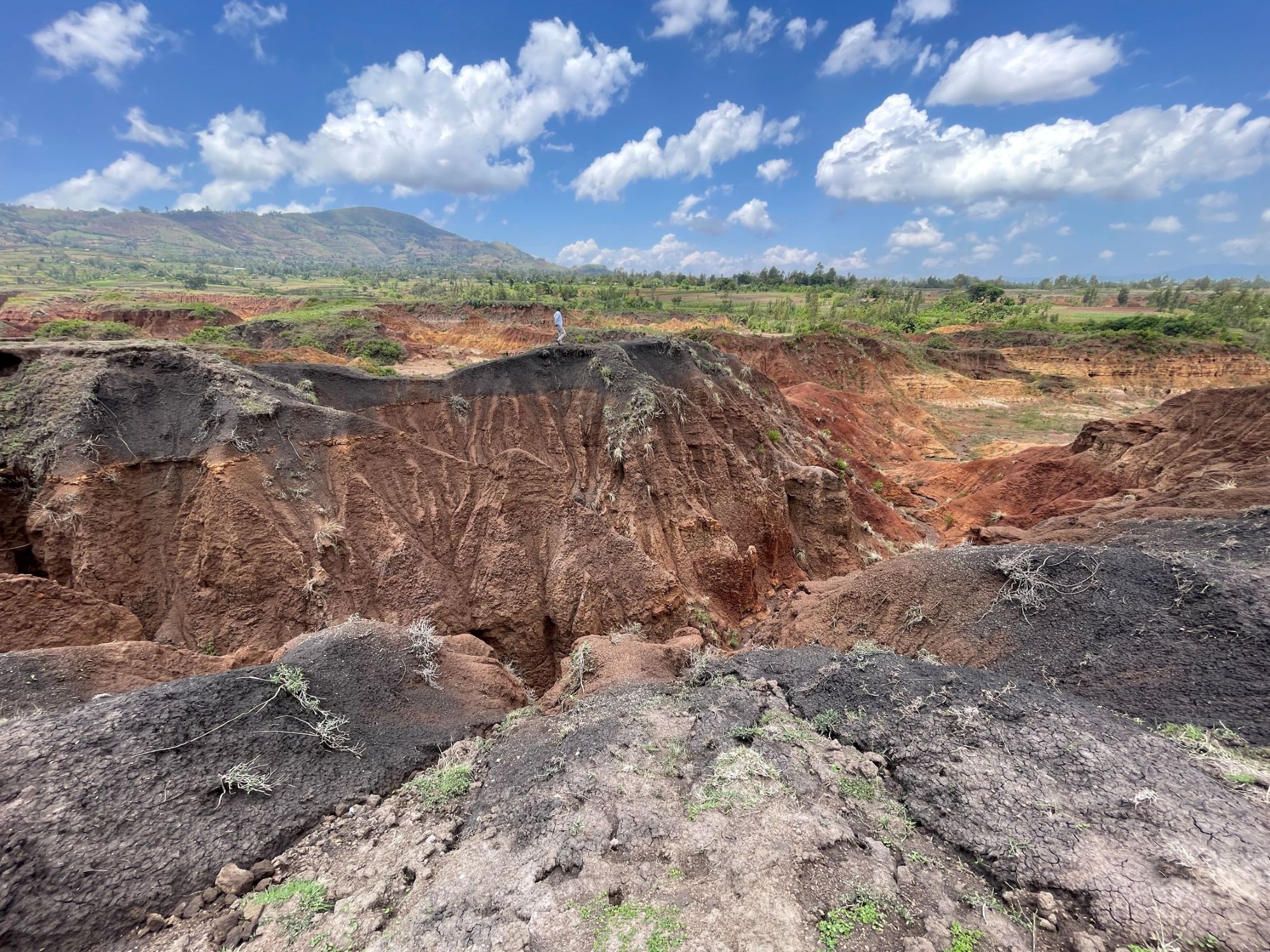
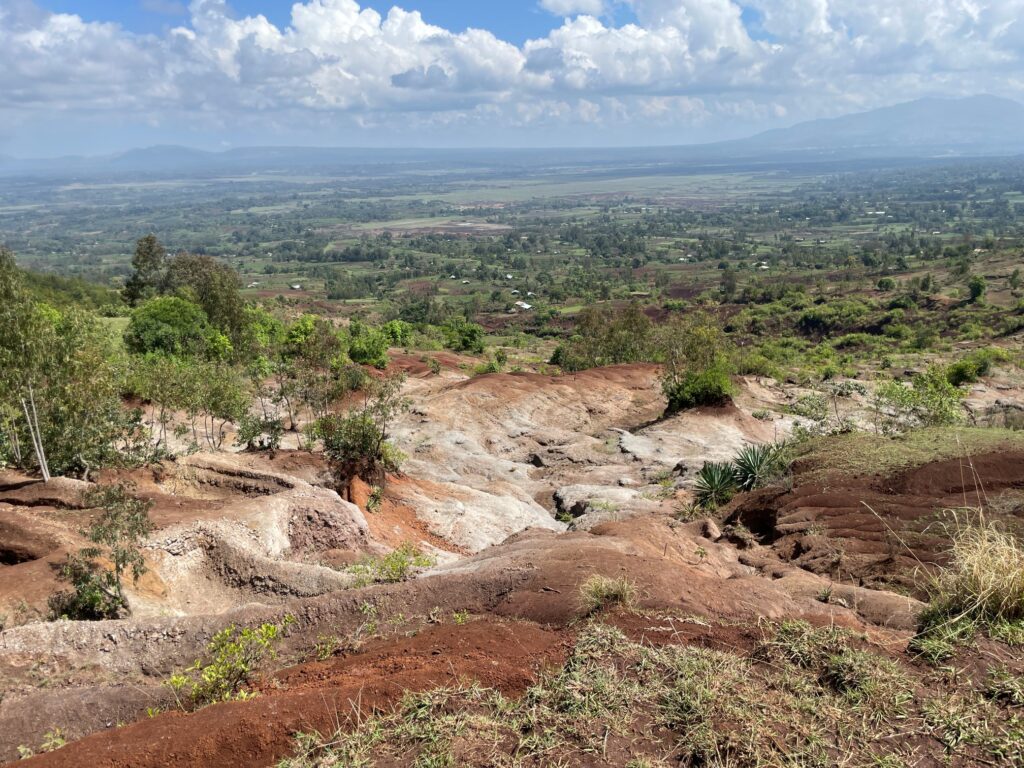
The sight in the Humbo region of the Ethiopian Highlands in April was striking: dozens of women and men using hand tools to dig terraces all the way down the steep mountain slope. Those terraces then became level ground for tree-planting to further hold back the floodwaters that used to torrent downwards after rains, carrying precious soils and carving out unfarmable gullies at the bottom.
This community effort to rehabilitate degraded watersheds is being led by Terepeza Development Association (TDA), supported by Tearfund Canada. It is part of Canadian Foodgrains Bank’s Nature+ program.
Nature+ is using nature-based solutions—such as conservation agriculture, reforestation, and improved water management—to enhance the well-being of communities and the landscapes that surround them.
The Foodgrains Bank program is funded through Global Affairs Canada, and works with local partners in three distinct regions: highlands of Ethiopia, semi-arid landscapes of south-eastern Kenya, and the mountainous Chimanimani region crossing the border between Zimbabwe and Mozambique.
While distinct, these landscapes all share extreme vulnerability to the impacts of climate change; high levels of globally important but threatened biodiversity, severe land degradation; and high levels of hunger and poverty. Women, girls, and other vulnerable groups bear the greatest burden of these threats.
A mountain slope in southern Ethiopia shows evidence of erosion. (Photo: Carol Thiessen)
We recognize that global hunger is complex. Its prevalence is connected to poverty and inequality, loss of biodiversity, the impacts of climate change seen in increasing floods and droughts, conflict, and other failures of the food system.
There is also growing recognition that we can’t set aside small areas to protect nature while allowing unsustainable approaches to development everywhere else. In the same way, we can’t support individual farmers to improve their practices, while ignoring the denuded landscapes that surround them, the lack of markets nearby, the inequality experienced by women and girls, or poor government policies that inhibit community flourishing.
We need interconnected approaches, owned by local communities who participate and lead in the sustainable management of their natural environments while producing bountiful crops and earning incomes in ways that sustain their lands now and for generations to come.
This is not just wishful thinking. Thanks to Canada’s current climate finance portfolio—specifically its Partnering for Climate program—the Foodgrains Bank’s Nature+ program and others like it can take a more joined-up approach to multiple crises facing people with low income across Africa.
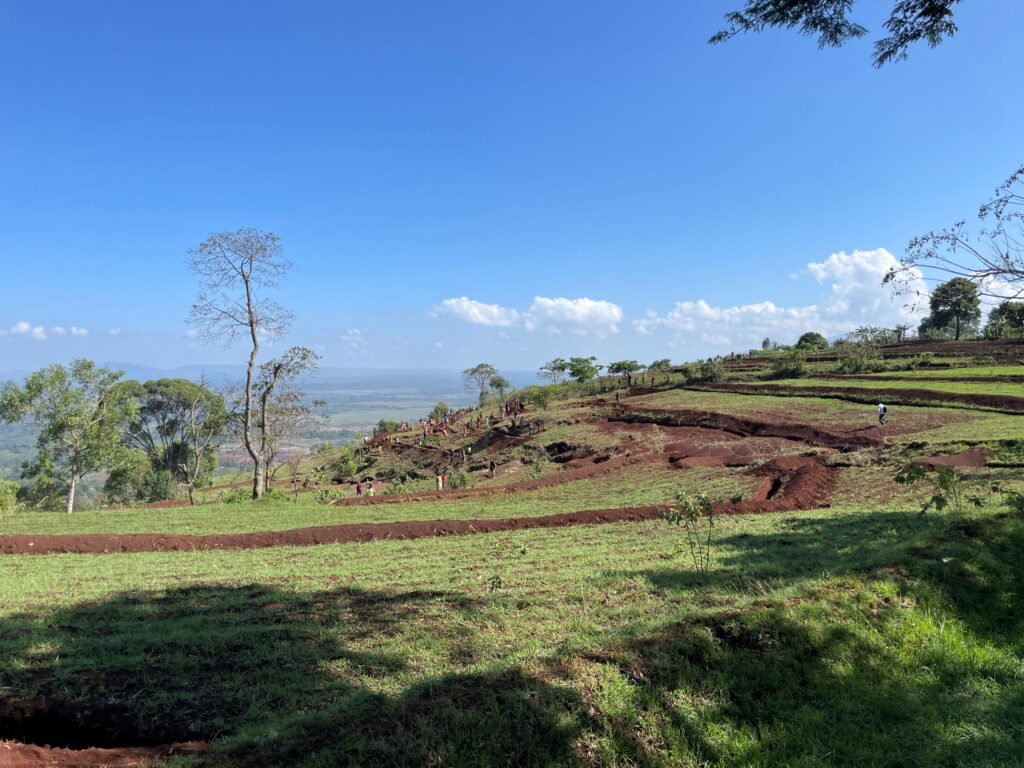
Terracing in action: In southern Ethiopia, TDA has supported local communities to plant approximately two million trees. (Photo: Carol Thiessen)
Back in southern Ethiopia, TDA has supported local communities to plant approximately two million trees, comprising more than 20 species. In the next two years, they aim to rehabilitate three watershed areas, covering almost 4,000 hectares.
Approximately 9,000 community members have joined TDA’s various activities, which also include training in nature-based solutions for their individual farms; setting up hundreds of savings groups that empower community members to individually and collectively save money, add value to their products and find new markets; training marginalized community members in producing and marketing fuel-efficient cook stoves; and empowering women and girls to take more leadership roles and advocate for policy changes for the benefit of their communities.
In the long-term, TDA’s goal is to rehabilitate eight watersheds, covering the size of 12,000 soccer fields. Their ambition is rooted in the deep needs of the communities where they live and work.
And it should be supported by an equally ambitious climate finance commitment from Canada that can help change lives and restore degraded lands—terrace by terrace, tree by tree, and one interconnected landscape by another.
These are excerpts from a November 2024 article, originally published in The Hill Times.