“We hope to see a more self-reliant, skilled, and empowered Panchthar community – especially among smallholder farmers and women.”
Those are the words of Nazarene Compassionate Ministries (NCM) Nepal staff Surya Rai and Sandeep Mukhiya, who are partnering with NCM Canada and Canadian Foodgrains Bank on an agriculture and livelihoods project in Panchthar, Nepal. The three-year project will enhance food security and livelihoods for 1,371 farming households.
Farmers in Panchthar face several challenges, including insufficient food production, animal diseases, lack of affordable credit, and weak access to markets for trade. “Due to [a] mismanaged market system, imported goods are found in the market cheaper than the local product – though the quality is different,” says Surya and Sandeep.
Farmers who rely on the land for their livelihoods also face severe climate challenges. “When there is excessive rain, landslides and flooding occur and sweep away the produce, and if drought occurs, then the land will have no yield.”
When landslides occur during the main season for vegetable and fruit production, this makes it very difficult for farmers to transport and distribute their produce.
Because of these multitude of factors, food production is not common in the area, say Surya and Sandeep – but they hope this will change in the future with the project’s support.
“Ultimately, we envision a Panchthar community where farmers are not only productive but also organized, financially stable, and linked to systems of support that ensure long-term development and resilience.”

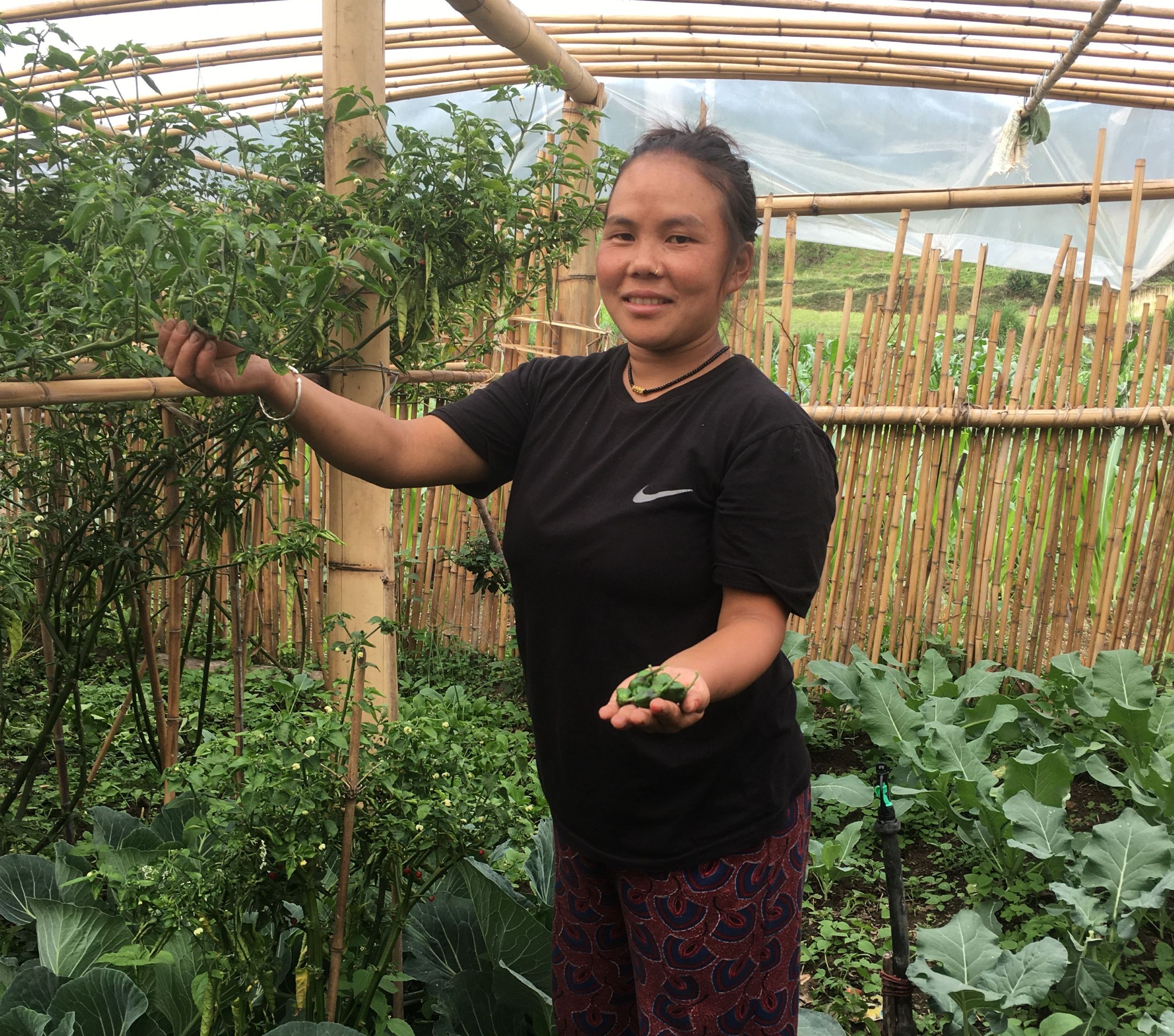
The project will expand into a third ward of Panchthar district in the second phase between 2025 and 2028, building on the strong foundations of the first phase of the project which included nutrition training for farmers. (Photo: NCM)
The new project will enhance food security and livelihoods, building on the success of the first phase of the project, by providing smallholder farmers and landless families with targeted technical capacity building, veterinary services, agricultural inputs, nutrition education, access to credit, and farm equipment.
“In the first phase, the focus was on improving household food security, and in the second phase, the focus is to improve livelihoods by entering commercial farming and ensuring participants are food secure.
“Building on these successes, the current project aims to further strengthen these agricultural groups by converging them into a cooperative, ensuring their long-term sustainability even after the project ends. This approach will create a structured, community-owned platform for continued growth, market access, and resilience – anchored in the foundations laid by previous interventions.”
Farmers trained in the first phase will be encouraged to be the trainers in the second phase of the project, says NCM, which will help to ensure sustainability – one of the long-term changes they hope to come out of this project.
Local government has provided subsidies, agricultural tools, and capacity-building trainings to the registered agricultural groups, contributing to a stronger food system as groups are better positioned to access these government-supported programs.
The project will run until 2028.