In Ethiopia
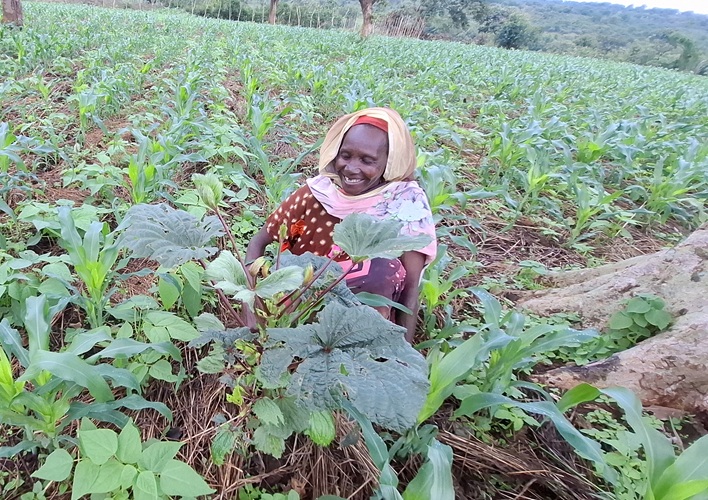
“Before I started conservation agriculture (CA), there was no field for me. Life was not what you are seeing here,” reflects Ethiopian farmer Rawda.
Her life changed when she started implementing the CA techniques she learned through the Nature+ program. With support from FH Ethiopia, partner of Foodgrains Bank member Mennonite Central Committee, Rawda began with a 10×10 metre field, and increased her crops year after year.
“Now I have a lot of cattle and goats, and I also grow haricot beans. For the first time I have sold haricot beans for 8000 birrs, just from intercropping them. In my life, this is the first time I have been able to sell a crop… my life is already changing. My children’s lives are also changing.”
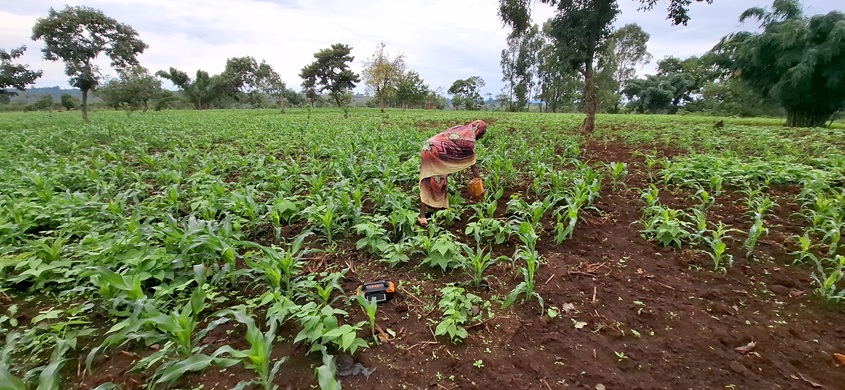
Rawda is one of 75,000 farmers across four countries who are experiencing the benefits of CA through the Nature+ program, funded by the Canadian government and Foodgrains Bank. (Photo: FH Ethiopia)
Prior to her success with CA, Rawda had to collect firewood and sell it at the market just to be able to afford food for her family. “I buy only salt and soap [from the markets] now – the other things I already have,” she says.
And it’s not just CA that farmers are benefitting from, but the self-help community groups that help families learn financial management and strengthen their skills in planning, saving, and working together.
Rawda’s self-help group grows three types of crops – maize with intercropped haricot beans, teff, and sorghum – and collects the savings every two weeks. And after witnessing her success, Rawda’s group has also started implementing CA.
“I have had 13 farmers come to visit me and learn from me,” she says. “I called them and said, “Let us work together. Come and see. I got a lot of crops last year. Come learn from me.” I went to their homes and showed them how to plant – and now this group is doing CA.”
You can watch Rawda tell her story here.
In Canada
Conservation agriculture principles such as minimum tillage and covering crops are used by food producers around the world, from small scale farmers in Ethiopia to large Canadian prairie farms.
And on Vancouver Island, John and Shan Beley are turning their interest in urban sustainability into action with their own conservation agriculture (CA) garden. For the couple, sustainability is about caring for the environment in their own community, as part of a broader commitment to a greener, more resilient world – which includes supporting Foodgrains Bank’s efforts to end global hunger.
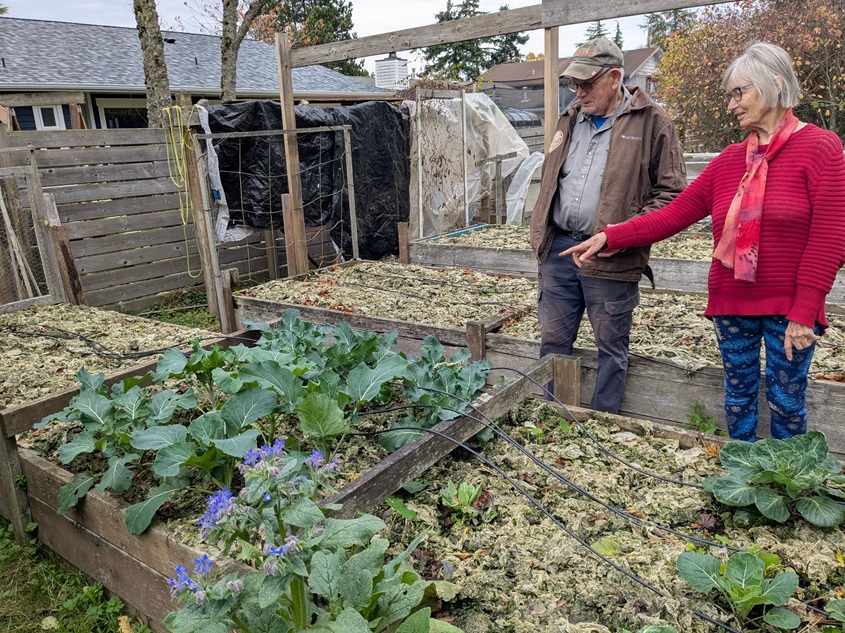
In the winter season, John and Shan Beley were busy harvesting food such as parsley for their daily use at home, and to give any excess to neighbours. (Photo: Jet Takaoka)
“Ending hunger means that all people, everywhere, have access to nutritious food. That means we need to end poverty, conflicts, unemployment, inequalities, etc. Foodgrains Bank looks at all these issues and works towards solving them.”
The couple first heard about Foodgrains Bank many years ago at a United Church event in Saanich and were encouraged by “how much of our donation goes to directly helping.”
With farming roots in Saskatchewan, Shan has long practised CA and continued it when their family moved to British Columbia.
“Since we don’t live on a farm [or] have farm animals and their manure, we gather seaweed and leaves which nicely supplies fertility to our garden. Our many 45-gallon barrels collect rainwater from the roof to help conserve our precious resource – water.”
This story was originally published in the 2026 spring edition of Breaking Bread.