Throughout my career, one thing I’ve learned is this: good humanitarian work isn’t just about doing the work – it’s also about evaluating whether it is improving the lives of the people we aim to serve.
My role at Foodgrains Bank is monitoring and evaluation technical advisor, which means I’m one of several people who provides feedback on the projects implemented by Foodgrains Bank members and their local partners. We’re the ones asking extra questions, checking assumptions, and digging deeper into how and why things are happening.
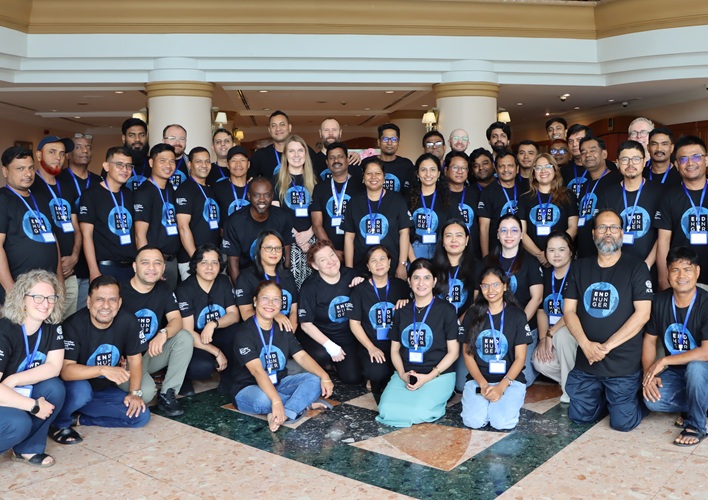
I recently had the opportunity to travel to Cambodia where 56 partner, member, and Foodgrains Bank staff representing nine countries gathered to learn from each other about monitoring and evaluation in their contexts.
“Every moment [of the workshop] was awesome and enjoyable, especially the learning sessions,” said Nepali project coordinator Surya Prakash Rai, who attended the Cambodia workshop on behalf of Nazarene Compassionate Ministries (NCM) Nepal, partner of NCM Canada. “As I learned, monitoring and evaluation is “a good captain which can land safely at the right destination” – carrying the project’s good results.”
Monitoring and evaluation of projects are essential in every context – but “success” can look very different from one place to another. In rural Cambodia, for example, families have access to very small plots of land. They often make use of the space beside their homes, building greenhouses that allow them to grow vegetables, and sometimes farm fish, or frogs.
This raises practical questions about how to measure progress. How do we monitor something like frog farming? It’s not by counting every single frog. Instead, a more realistic approach is to track income from frog sales, which offers a clearer picture of meaningful progress. This is why understanding local priorities and contexts is so important.
Accountability to participants, to Canadian donors, and to the Canadian government through monitoring and evaluation is at the heart of our work. When we truly listen and learn from communities, we gain valuable insights that can be shared across the entire Foodgrains Bank network.
This story was originally published in the 2026 spring edition of Breaking Bread.