Create food security. Build climate resilience. Strengthen local economies. These are among the many roles and responsibilities of rural women and girls around the world. According to the United Nations (UN), women are responsible for half of the world’s food production. Yet women are often denied the same opportunities as men.
From land rights to education, rural women have less access to a range of resources. If women had the same access to productive resources as men, farm yields could increase by 20-30 per cent, says information from the UN. For a rural mother battling the effects of climate change on her crops, this could make a world of difference for her children.
Empowering rural woman
October 15 marks International Day of Rural Women. It’s a time to reflect on the sacrifices, perseverance, and achievements of women and girls living in farming communities around the world. This year, Canadian Foodgrains Bank is celebrating the work of our members and their global partners – who are empowering rural women to become more resilient and serve as agents of change in their homes and communities.
Here are stories from three inspiring women who have found ways to preserve in the midst of challenging circumstances.
Rebuilding hope
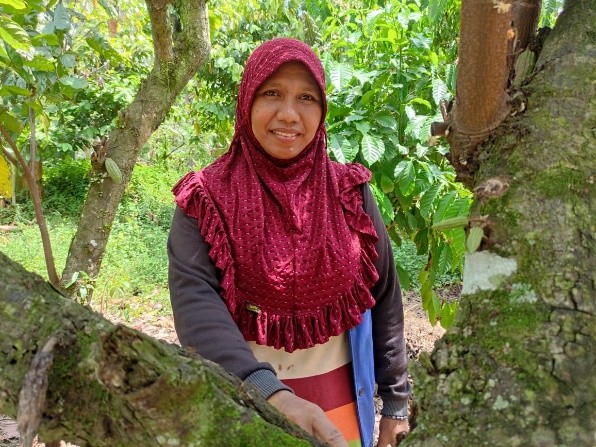
As a farmer in rural Indonesia, Sinar knows what it’s like to work hard and juggle multiple roles to help make ends meet. The 42-year-old mother of three works as a farmer, occasional labourer and a vegetable seller at the local market to support her family. Although her husband works as a daily labourer, Sinar’s income plays a vital role in their well-being.
After a series of natural disasters destroyed their home and cocoa crops, Sinar found hope through a project supported by our member, Adventist Development and Relief Agency (ADRA) Canada. Facilitated by their local partner, ADRA Indonesia, the project helped train Sinar and other community members on how to grow cocoa seedlings for rehabilitation.
“I learned so much about cocoa [through the project], which inspired me to revive my cocoa cultivation on the remaining land damaged by landslides,” Sinar explains. She and her husband later purchased a small plot of land to grow maize as well.
Today, Sinar continues to rebuild and expand her cocoa farm, so her family can have a better future.

A mother’s love
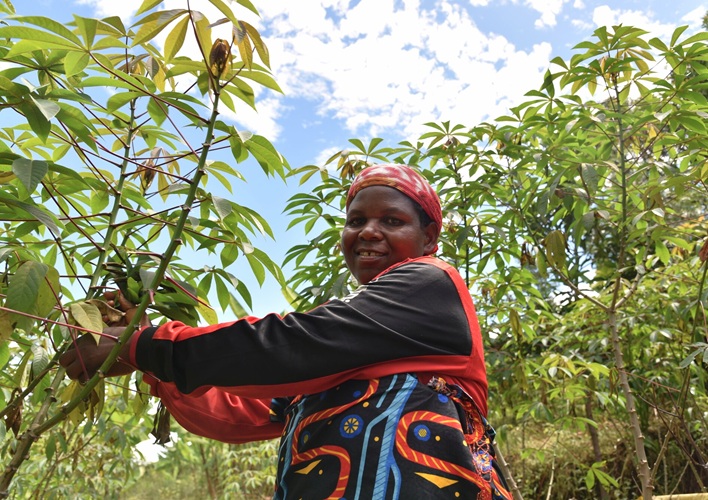
One meal a day. This is what life was like for Judes, a 45-year-old mother of eight. As cassava farmers in rural Burundi, her family spent years living in poverty.
“It wasn’t good,” she remembers. As a mother, Judes worried about the health of her children – knowing they faced a constant risk of malnutrition.
But things began to change for Judes and her family when she joined a program supported by our member, Mennonite Central Committee (MCC). Help Channel Burundi, MCC’s local partner, ran the project and helped Judes learn new conservation agriculture skills. She learned how to better protect the soil, separate crops and use seeds more effectively. She also joined a Village Savings and Loans Association, which helped her purchase more land for farming.
Judes and her husband went from growing 70 cassava plants to over 1,750, which allowed them to increase their income by selling more cassava at the local market.
“My hope for my children is for them to continue school,” says Judes. “I will continue to work hard, so I get money to pay for school fees.”
Overcoming life’s challenges
Life drastically changed for Hasina when her husband left her. As a mother of two living in rural Bangladesh, she had little to no opportunities to provide for her children. At times, they spent days without access to nutritious food.
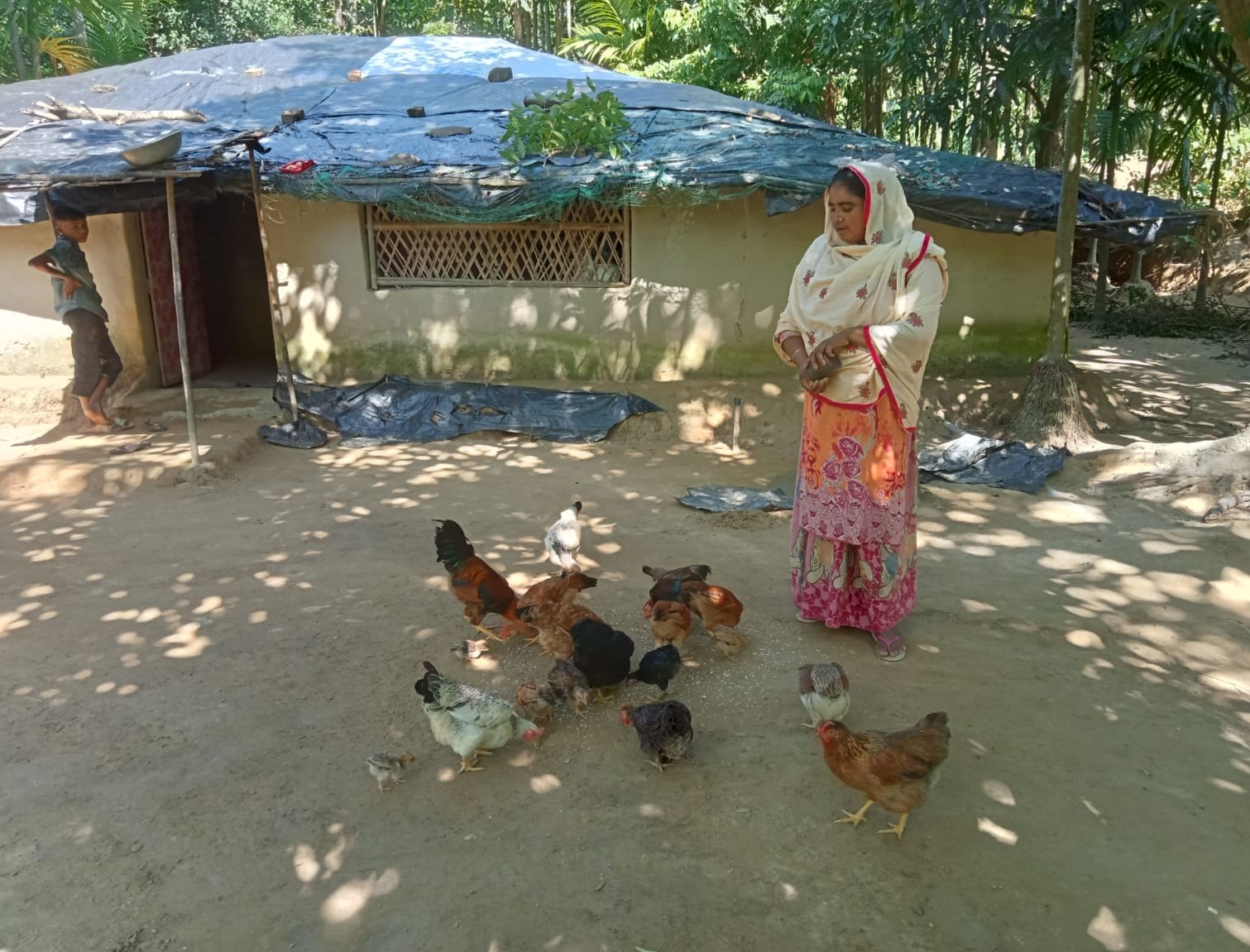
During this season in her life, the Sustainable Association for Taking Human Development Initiatives (SATHI) launched a food security project in her community. SATHI is the local partner of our member, World Renew. Through the project, Hasina joined a women’s group and learned about poultry rearing. She also received five chickens following the training.
In the past, Hasina tried to raise chickens to support her family. But many of them died from improper care and diseases. Thanks to the training she received through SATHI’s project, Hasina’s chickens increased from five to 45. Now, she understands how to raise chickens properly so she can regularly provide food for her children. She also earns additional income by selling her chickens – which provides more accessible food for her community.
“I did not know what to do when my husband left me,” says Hasina. “But my involvement with the project has changed my life beyond imagination.”
Foodgrains Bank has a vision for a world without hunger. But achieving food security for all would not be possible without the perseverance and sacrifices of rural women around the world.
Click here to support our members and their partners as they work with women and communities to help end global hunger.