1,538 days.
That’s how long the world has before the deadline for achieving Zero Hunger – Goal 2 of the United Nations’ Sustainable Development Goals (SDG), created by world leaders who desired to make the world a better place.
We promised to end it by 2030. And we’ve made progress.
For the past three years, the rate of global hunger has declined modestly, proving that investments in food security, nutrition, and resilient livelihoods can make a difference. Thousands of families have restored their food security, and experienced how it feels to not worry about where their next meal is going to come from. In 2025-26 alone, Canadian Foodgrains Bank members reached over 1.1 million people with emergency food assistance and long-term agricultural support that will transform their futures. There are good things happening, and progress is being made.
But if 520 million people are still going to be left behind by 2030, then progress alone is not enough.
On World Food Day, Foodgrains Bank is urging the international community to renew its commitment to ending hunger. Now is not the time for wealthy nations to pull funding from international development. It is the time to pick up the pace, and commit to an accelerated approach that will get us to the end of 2030 in a significantly different position than we are now.
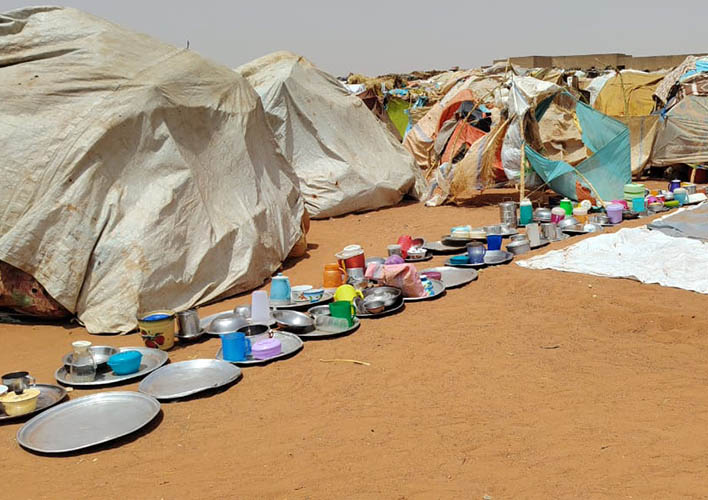
Because ten years on, the promise we made in 2016 still matters. It matters for Amna, a mother living through the midst of the world’s worst humanitarian crisis in Sudan, and it matters for Alphenès, a father in Haiti desperately seeking treatment and care for his baby as the child recovers from severe acute malnutrition.
It matters for all of us.
A world with zero hunger will positively impact our economies, health, education, equality, and social development. It is a key piece of building a better future, and to achieving other SDGs – because persistent hunger is one of the most limiting factors to our development as people and as a society.
We need only look to Brazil to remind ourselves that when local food security efforts are backed by sufficient funding, entire countries can transform their food security.
By relaunching its comprehensive Zero Hunger (Fome Zero) and Brazil Without Hunger (Brasil Sem Fome) governance frameworks, Brazil lifted over 40 million people out of moderate to severe food insecurity between 2022 and 2024, officially removing the country from the UN Food and Agriculture Organization (FAO) Hunger Map in July 2025.
It is one of the fastest recorded improvements in the world – driven by political decisions that prioritized farmers and food access in hunger policies.
But there’s another lesson Brazil has for us. In 2014, Brazil achieved an exit from the FAO Hunger Map, before facing a major downturn years later when anti-hunger councils were dismantled, budgets were cut, and the economic pressures of the pandemic hit. The very solutions that had pulled Brazil out of its hunger crisis had been abandoned, and hunger was back on the rise.
As today’s global aid cuts repeat the same mistake, it begs the question: if these reductions are not improving lives in recipient countries and are offering little benefit to people at home, what exactly is being gained?
In a world that produces enough food to feed everyone, hunger is not inevitable. It is a choice we make every time we abandon the solutions that have created the progress we see today.
Because when we get to 2030, whether we ended global hunger won’t just be counted on a goals tracking sheet or measured against missed targets. It will be counted in lives, and that is the measure that matters most.
By Andy Harrington, Canadian Foodgrains Bank Executive Director