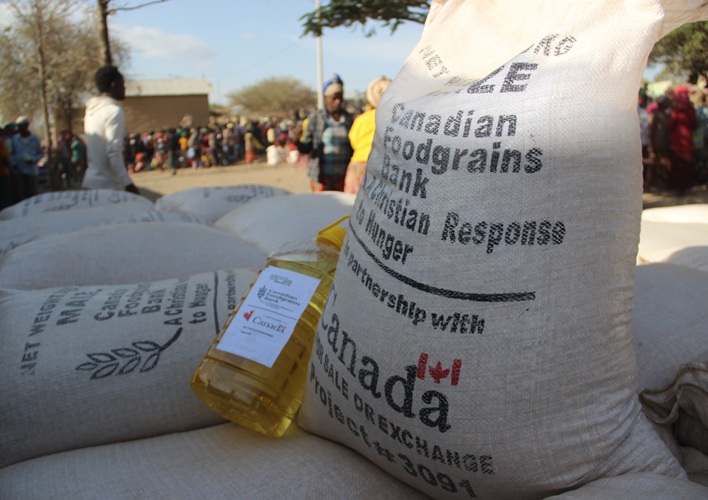
Global hunger needs are high due to increasingly frequent conflicts, extreme weather, and economic crisis along with widespread funding cuts to the humanitarian sector. The work of Canadian Foodgrains Bank members and their partners to respond to acute food insecurity in a time of crisis is more important than ever – and is making a critical impact.
Every project supported through Foodgrains Bank collects and reports on data that shows the impact it is having. This helps ensure that programming has the intended impact and supports partners to learn and adapt where needed.
Responding to Hunger in a Time of Crisis compiles data from the 47 food assistance and emergency nutrition projects that reported results last year and shows our collective, global impact. Together, these projects reached over 450,000 people with food assistance and 72,000 people with emergency nutrition services.
- 10,577 metric tonnes of in-kind food and $11.0 million of cash or voucher assistance to meet food needs was provided to participants.
- Programming enabled participants to eat more food and more diverse diets. End-of-project reporting showed that programming enabled 69% of participants to reach an acceptable food consumption score – up from only 12% at baseline.
- Participants no longer had to reduce meal sizes, the frequency of meals, or the quality of food eaten. Nineteen times as many participants were able to practice no or few coping strategies at endline than baseline.
- The emergency nutrition programming supported by Foodgrains Bank members enabled the treatment of 21,631 children and pregnant and breastfeeding women and girls for severe and moderate acute malnutrition.
- Programming was very well received by participants, with 97% of women and men indicating that they were very satisfied with the project they participated in.
- 2,587 community members became members of advisory committees that informed programming, ensuring that women and men were able to contribute to the humanitarian action that impacted their lives.
These are just some of the results that highlight the profound impact that Foodgrains Bank’s members’ partners are having around the globe.
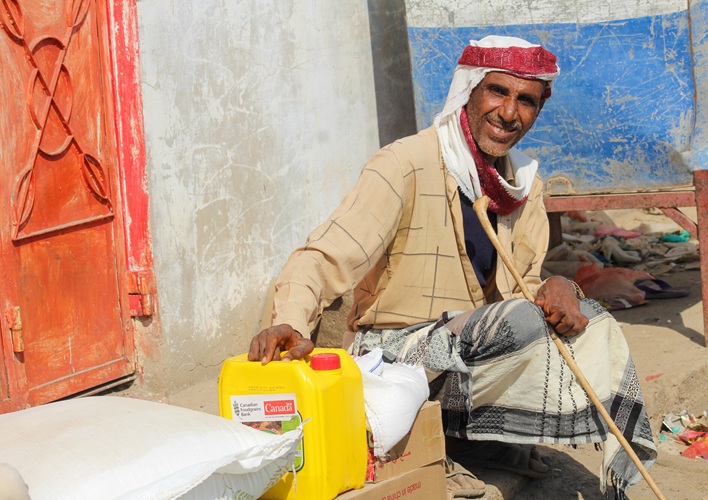
Beyond what partners measure for data collection, we frequently hear stories about other impacts. We know that programming is enabling people to bounce back from crisis, invest in livelihoods, send kids to school, or treat medical conditions like malnutrition. And we know that humanitarian programming is providing hope for people experiencing unimaginable crises. As one mother in Yemen shared this year, “when the food baskets arrived, it was as if we were born again. My children went to sleep happy, and they woke up happy because they had something to eat… these baskets are not just food supplies for us, they are life itself.”
To learn more about the work of Foodgrains Bank’s members in addressing hunger through food assistance and emergency nutrition, check out Responding to Hunger in a Time of Crisis.