Country: Nepal
Member/Partner: Presbyterian World Service & Development (PWS&D) / International Nepal Fellowship (INF)
Through his work with International Nepal Fellowship (INF), Devi Prasad Pyakurel has witnessed the devastating impact that natural disasters can have.
Families impacted by the 2023 earthquake in Karnali province, for example, “lost their homes, are living in temporary shelters, and facing significant economic hardship,” Pyakurel shared. “These realities inspire me to contribute towards improving their living conditions and supporting their recovery and resilience.”
Karnali province has the highest poverty rate in Nepal, and is highly prone to landslides, earthquakes, and drought. Because the local economy relies heavily on agriculture and livestock, many farmers experience low crop yields when crisis hits and struggle to afford enough food to support their families.
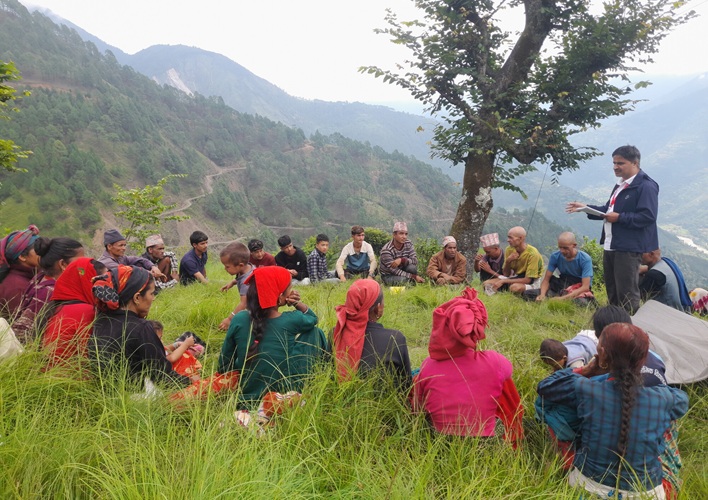
In response to the growing needs in the region, INF launched a new agriculture and livelihoods project in February. Supported by Foodgrains Bank member Presbyterian World Service & Development, the three-year project aims to improve food security for 2,082 people affected by the earthquake by promoting sustainable agriculture, supporting irrigation canals, and training women in financial literacy, among other interventions.
INF’s new project addresses the four pillars of food security as defined by the United Nations, which align with our work at the Foodgrains Bank:
1) Availability: Ensuring a reliable supply of nutritious food through climate-resilient agriculture, producing food locally, and helping families grow gardens for their own food supply.
2) Access: Empowering families to generate income with the support of vocational training, entrepreneurship development, and connecting farmers with markets. Higher wages mean families can afford to buy food with diverse nutrients.
3) Utilization: Promoting the body’s ability to absorb the nutrients in food through nutrition and hygiene education, especially among pregnant and breastfeeding women.
4) Stability: Helping communities to build resilience through disaster risk reduction and climate adaptation training.
Through this new project, Pyakurel hopes communities in Nepal will better “adapt to climate change and effectively manage disaster risks – making them more resilient and self-reliant in the long term.”
We’re grateful to report that all projects supported by Foodgrains Bank in Nepal that are located in other regions of the country have been able to safely continue programming after the devastating flash floods in August 2026. For the latest information, visit foodgrainsbank.ca/nepal
This story was originally published in the 2026 fall edition of Breaking Bread.