As a Foodgrains Bank senior program officer with a focus on nutrition, I’ve seen the lifesaving impact of nutrition projects around the world. Nutrition projects go the extra mile by prioritizing children under five as well as pregnant and breastfeeding women (who are at greatest nutritional risk), and focusing on diet quality, disease prevention, water, sanitation and hygiene, and health education.
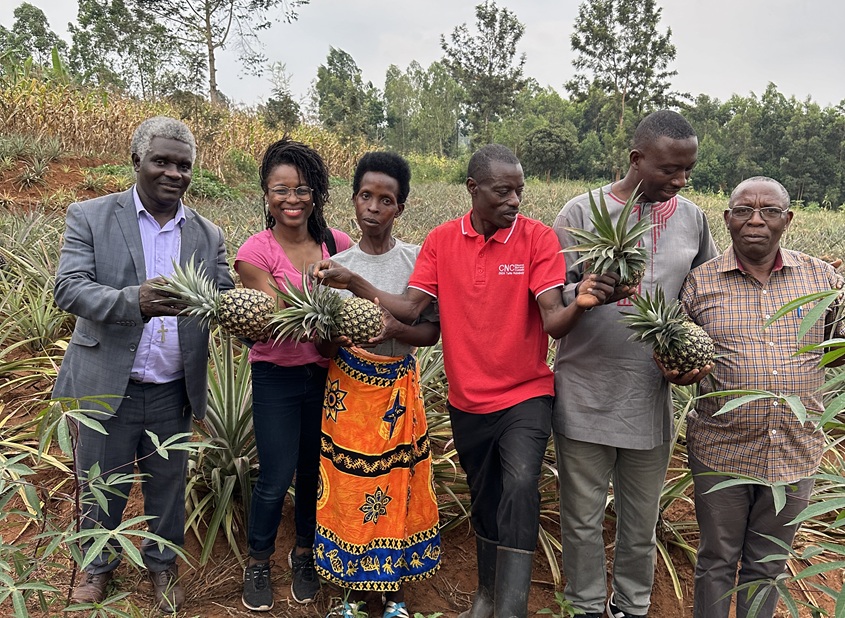
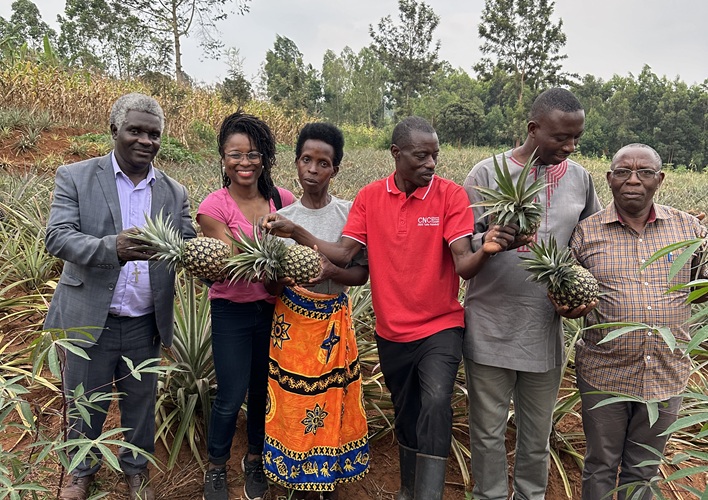
Tineh (second from left) stands with participants of an agriculture and livelihoods project in Rwanda, as well as staff of Canadian Baptist Ministries and its local partner Association des Églises Baptistes au Rwanda. (Photo: Supplied)
Here are four facts about malnutrition:
1) Severe acute malnutrition is a medical emergency that can become life threatening
Children with untreated severe acute malnutrition are more likely to die from common illnesses because their immune systems are severely weakened. Nutrition interventions, such as screening, early detection and treatment, help prevent avoidable deaths.
2) Malnutrition reduces the ability to cope withillness, stress, and crisis
When someone is malnourished, they become more vulnerable to infections and illness, which can further worsen their nutritional status by reducing appetite, impairing nutrient absorption, and increasing nutrient requirements. This creates a cycle where malnutrition and disease reinforce each other. In a crisis, malnourished individuals are often among the first and most severely affected. They also have a much higher risk of severe illness and death.
3) Food availability does not necessarily mean good nutrition
Malnutrition can occur even when food is available, due to illness, poor water, sanitation and hygiene, nutrient-poor diets, inadequate care practices, or the body’s inability to absorb and use nutrients effectively.
4) Supporting the nutrition of pregnant and breastfeeding women is critical
A woman’s nutritional status directly affects both her health and her child’s health. Because a healthy diet provides the essential nutrients needed for growth and brain development, nutrition support early in life is one of the most effective ways to protect vulnerable children and help them reach their full potential.
Transforming her family’s future
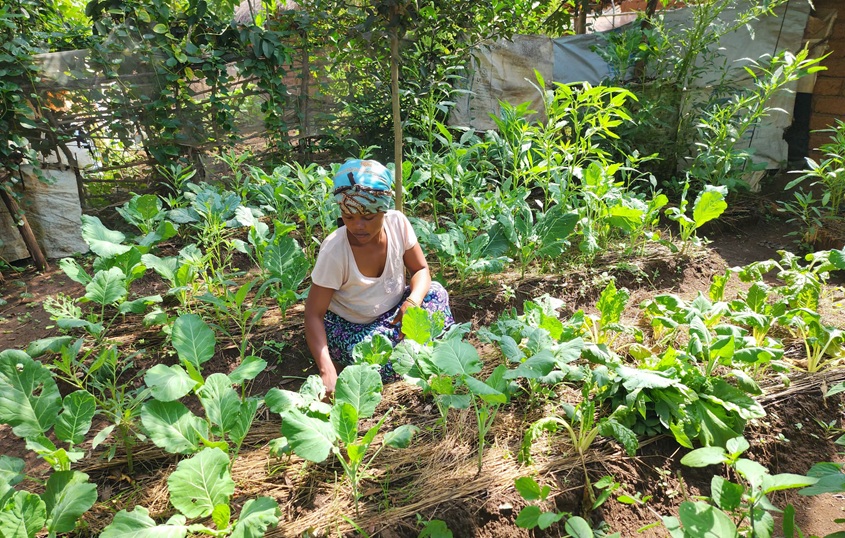
Aimerance’s story shows that with the right support and nutrition, refugee families can overcome adversity and build a brighter future. In this photo, she tends to her kitchen garden in Nyarugusu Refugee Camp, where she’s harvesting spinach to improve her family’s nutrition, and also to increase household income by contributing to the local market. (Photo: CWS)
The power of nutritional support is exemplified in the life of Aimerance, a mother from the Democratic Republic of Congo. As refugees fleeing conflict, her family often ate just one meal a day. In 2024, Aimerance changed their future by joining an agriculture and livelihoods project supported by Foodgrains Bank member Alongside Hope. Through local partner Church World Service, Aimerance learned about sustainable farming and proper nutrition. Now, her family enjoys balanced meals two or three times a day.
“Before, I struggled to provide for my children. But today, I am a farmer and a mother who can support her family. This project has transformed my life and given me hope for the future.”
This story was originally published in the 2026 fall edition of Breaking Bread.