Country: India
Member/Partner: Mennonite Central Committee (MCC) Canada / Disha
What if eating three full meals a day was a given for all, and not a privilege for few?
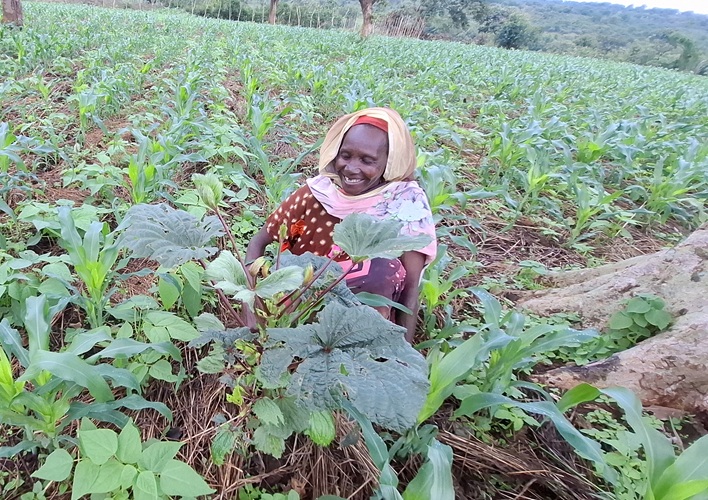
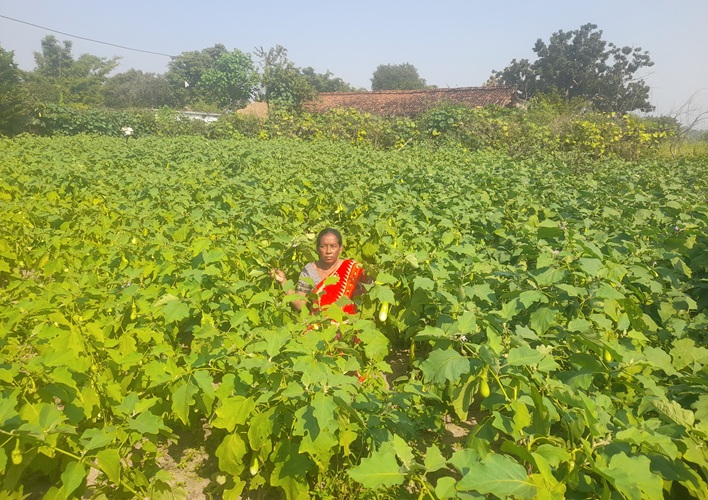
That’s what Disha, Mennonite Central Committee’s (MCC) local partner in eastern India, hopes will soon be the reality for 1,195 Indigenous farming families they’re supporting with a five-year agriculture and livelihoods project.
“It is also intended that most of the ingredients of the meal should be sourced from their own land and productive resources, decreasing market dependency to a minimum level,” says Manisankar Masanta, project officer at MCC India.
Indigenous communities in this area are severely affected by hunger and malnutrition, struggling with food scarcity for around six months in a year, while mostly eating carbohydrates or low-quality food in the remaining six months.
“The continuity of this situation for a long period of time has [a] severe impact on the [lives] of women and children, and on an entire tribal generation,” says Manisankar.
“Due to chronic hunger and malnutrition, [the] majority of men, women, and children face serious health issues which remain unaddressed. If [they’re] going to address [the medical issues], then they have to either mortgage the productive assets, or [sell] cattle and vegetable produce. It is a vicious cycle of [the] perpetuators of poverty which is due to hunger.”
In response, Disha is reducing hunger and malnutrition by reaching nearly 6,240 individuals with training on sustainable use of natural resources, improved agriculture practices, animal husbandry, and alternative sources of livelihood for families who don’t own land.
A significant part of the project is working with women’s groups to improve knowledge and food security.
Women, who are often disproportionately impacted by hunger, “play a strategic role in the form of groups to decrease hunger and malnutrition,” says Manisankar. “Having their high concern and eagerness to participate for a food-secure family, these groups are supported for all livelihood generation activities, skill development, and capacity building.”
Additionally, a high number of women in the groups have started new income generation activities like starting small businesses to increase family income.
This story was originally published in the 2025 fall edition of Breaking Bread.