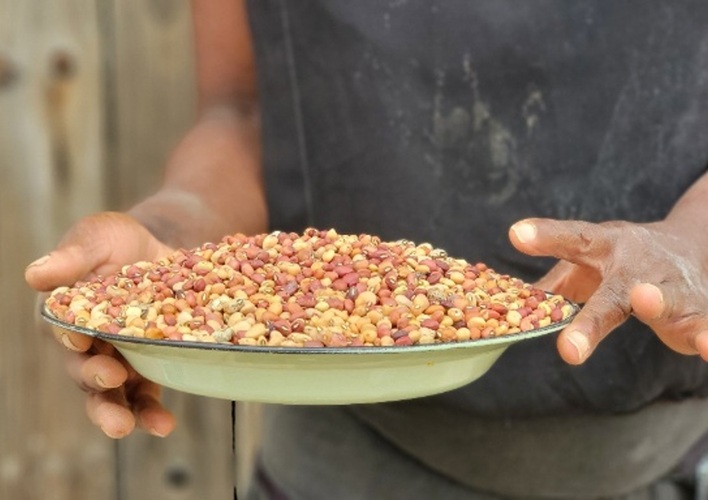
In 2025-26, we approved funding to support 675,377 people facing long-term hunger in 24 countries.
Our development work focuses on supporting families’ efforts to lift themselves out of poverty. This often involves working with communities to strengthen their ability to rebound after natural disasters including:
- helping families rebuild their livelihoods
- offering training on conservation agriculture
- improving nutrition for families
BUILDING CLIMATE-RESILIENT LIVELIHOODS
As farmers in rural Zimbabwe, Hedwick and her husband understand how severe changes in climate can affect their future.
Two years ago, recurrent drought and floods – combined with soaring food prices and economic instability – made it nearly impossible for Hedwick’s family to sustain their harvest, pushing them into chronic hunger. With no produce to sell, she and her husband turned to casual labour like collecting firewood to survive. “It wasn’t much,” says Hedwick, “but it was something to keep the children in school.”
In 2024, Hedwick and 1,375 other farming families joined an agriculture and livelihoods project implemented by Zimbabwe Council of Churches (ZCC), the local partner of Foodgrains Bank member The United Church of Canada. Through the three-year project, which runs till 2027, Hedwick learned about conservation agriculture – a climate-resilient way to enrich the soil and reduce crop losses.
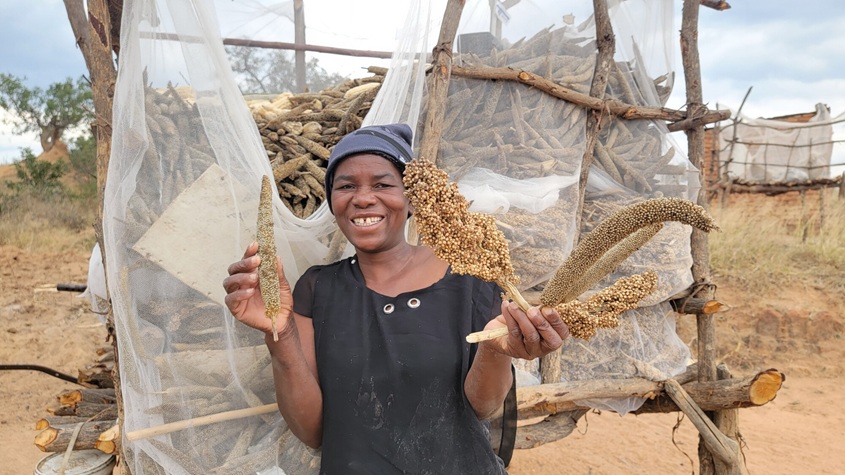
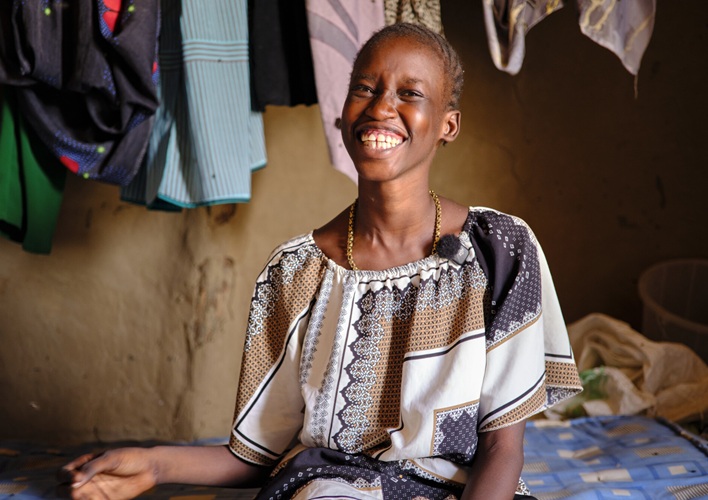
Through an agriculture and livelihoods project implemented by Zimbabwe Council of Churches (ZCC), partner of Foodgrains Bank member The United Church of Canada, Hedwick has increased her harvests through conservation agriculture. She is also participating in a savings and lending group, which enabled her to access loan to start a small business and diversify her family’s livelihood sources. She is expecting to use part of her savings to buy assets such as goats, which do well in the area and are easy to rear. “I’m learning how to save, how to plan,” she says. “It feels good to belong to a group of women who believe in each other.” (Photo: ZCC)
Following the training, Hedwick worked with six other women to dig planting basins across her three plots. “We did it in two days, together,” she says with pride. That first season, they harvested eight 50 kg bags of sorghum and one bag of cowpeas.
Today, Hedwick has a different outlook on life. “I used to only think about surviving the day,” she remembers. “Now, I think about what legacy I can leave for my children.”
This story was originally published in the 2026 summer edition of Breaking Bread.