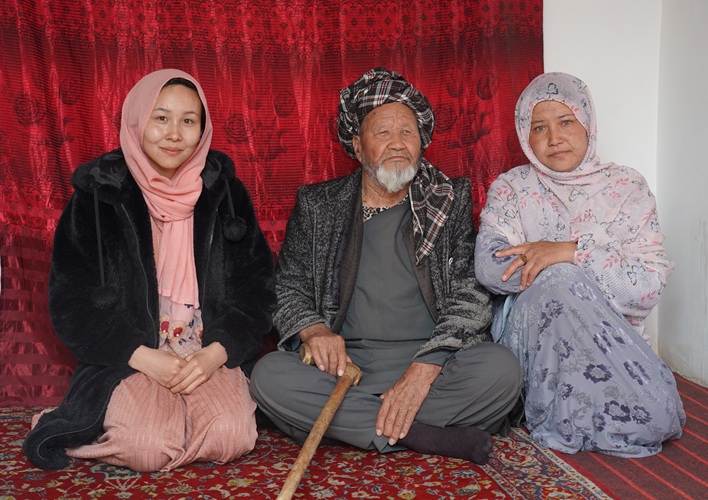
In the rugged mountains of Bamyan, Afghanistan, lives Ghulam*, a 65-year-old man whose life has been shaped by profound loss, enduring hardship, and remarkable resilience.
Twenty years ago, Ghulam lost his first wife Aqila* to a sudden heart condition, leaving him and their infant son, Hussain Dad*. With the support of family, Ghulam later remarried, had three more children with his second wife Sabira*, and spent years working long hours doing day labour to provide for his growing family.
But in 2014, tragedy struck again when his eldest son – who was only in his early twenties – suffered a fatal heart attack. For Ghulam, the grief of losing his son was overwhelming, and the immense mental stress contributed to the loss of his vision.
With Ghulam no longer able to work, Sabira sought out any employment opportunities she could. However, despite occasionally finding work as a labourer earning approximately $80 CAD per month, employment was limited, and most nights her family survived on nothing more than dry bread and water.
“I collect twigs and scraps from the market to burn during the harsh winters of Bamyan,” says Sabira. “But there was no way to provide enough food. The shopkeepers wouldn’t offer us credit because they knew we couldn’t repay it. There were nights my children cried themselves to sleep from hunger. I felt helpless as a mother, unable to provide even the most basic necessities for my family.”
Through a project implemented by Presbyterian World Service & Development’s (PWS&D) local partner in Afghanistan, the family received five monthly transfers of approximately $55 CAD. This critical financial support allowed them to purchase essential food items that sustained their family for weeks at a time.
“For the first time in years, my children went to bed with full stomachs,” Sabira says. “It may sound like a small thing, but for us, it is everything.”
Beyond providing immediate relief, the project helped restore dignity to their family during a time of hardship, says Ghulam, giving them hope for the season ahead.
“I may have lost my sight, but I can still feel the warmth of this kindness. It has given my family the opportunity to live again.”
*Names changed for privacy reasons.
This story was originally published in the 2026 winter edition of Breaking Bread.