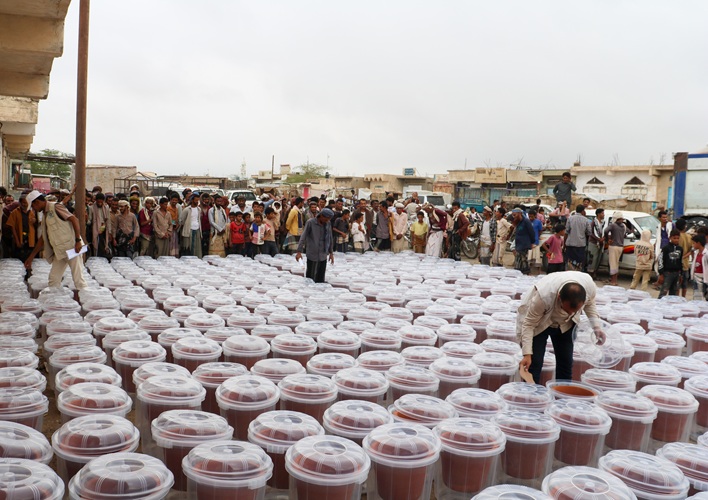
Hunger rates still too high around the world.
In 2024, one in 11 people globally faced the daily reality of not having enough to eat.
The 2025 State of Food Security and Nutrition in the World (SOFI) report revealed up to 720 million people around the world experienced chronic hunger in the previous year. And an estimated 2.3 billion people struggled to access adequate food regularly.
These distressing figures were driven primarily by violent conflict, followed by climate shocks, and economic instability. Nowhere is the hunger crisis more acute than in Sudan and Gaza, where it has reached devastating levels.
Despite these challenges, the work of our members’ local partners in 37 countries around the world is good news. We’re honoured to support and amplify the efforts of local partners who are leading the fight against hunger in their communities, making our mission to end hunger possible.
CAUSE OF HUNGER: POVERTY AND INEQUALITY
“There is no joy in the world that equals a moment like this,” says Hamdan*, speaking about his daughter regaining her health after food assistance from ERDO’s (Emergency Relief and Development Overseas) local partner in Yemen meant no longer choosing between food and medical bills.
This was especially true after the onset of his own disability, he says. “I worked hard to provide for my wife and children until the day came that changed my life completely. I had a painful accident that stole from me the most precious thing I had: my ability to walk and work.” Hamdan started to borrow money from neighbours and was grateful to receive money from his brother overseas. However, it wasn’t enough to cover their basic expenses, and when their daughter fell ill, needing four surgeries as well as medication, the family’s situation worsened.
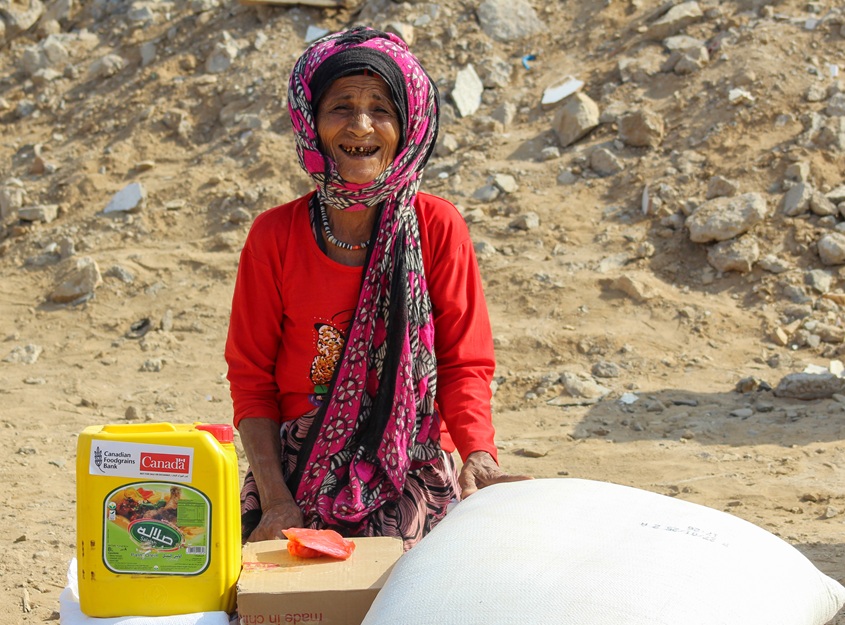
Deep-rooted poverty, systemic inequality, and a collapsing economic system continue to limit access to food and basic services in Yemen, especially for women, girls, and people with disabilities. (Photo: Supplied)
In late 2024, the family was one of 1,502 households (10,546 individuals) who met the vulnerability criteria to receive six months of food baskets from ERDO’s local partner, allowing them to shift limited resources from food to urgently needed healthcare.
“That basket was not just assistance for [us]; it was a lifeline… I saw [my daughter] improve before my eyes, returning to laughter and play little by little. In my heart, there is hope, and on my face, a smile I hadn’t known for a long time. Thank you to every person who contributed to it.”
*Names have been changed for safety.
CAUSE OF HUNGER: CLIMATE CHANGE AND NATURAL DISASTERS
Unpredictable rainfall patterns. Extreme weather. Landslides and mountainous landscapes. In North Kivu, Democratic Republic of the Congo, these are some of the environmental challenges that many households who depend on small-scale agriculture for their livelihoods face – challenges that prevent them from producing enough food to cover household needs year-round. In response, Canadian Baptist Ministries and Tearfund Canada are jointly supporting Communauté Baptiste au Centre de l’Afrique with a three-year agriculture and livelihoods project reaching nearly 14,200 people with sustainable farming trainings.
“My field is improving slowly,” says mother and pastor’s wife Hélène Kahindo Syayikomia, who has adopted conservation agriculture techniques on the church farm, influencing many others in her community.
She’s now promoting the benefits of mulching to other members of her church – to reduce soil erosion, improve soil health, and increase crop production volume. Additionally, Hélène’s kitchen garden with cauliflower, leek, tomato, and more contributes to her family’s food diversification. “I no longer go to [the] market for vegetables because the amaranth is maturing early and takes a few minutes cooking, and the African nightshade is harvested several times almost every week. I am walking on the path to food security,” she said.
CAUSE OF HUNGER: CONFLICT
In Haiti, ongoing violence, displacement, and limited humanitarian access continue to put families at risk of hunger. As a result, one in every four children are affected by malnutrition – the leading cause of death for children under five years old in Haiti.
To combat this, Presbyterian World Service & Development’s local Haitian partner Zanmi Lasante (ZL) is providing malnutrition treatment programming for children aged 6-59 months, while also providing counselling for parents and caregivers on infant and young child feeding practices.
Through this project, ZL is making an intentional effort to involve fathers in the fight against child malnutrition to help shift cultural norms – leading to healthier children and stronger families.
Local father Alphenès was devastated to learn his four-year-old son Phare-Edentz was struggling with severe malnutrition, after taking him to ZL’s hospital site to ask about his symptoms.
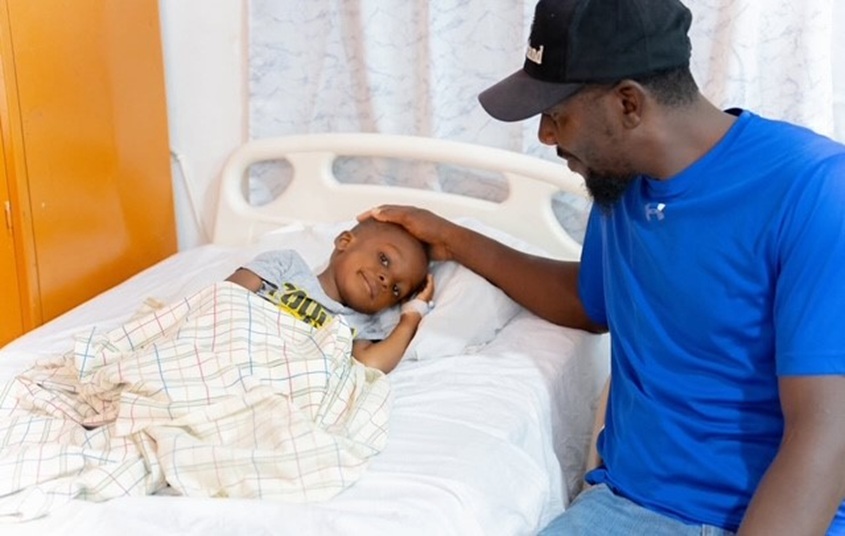
Alphenès and his 4-year-old son Phare-Edentz who was admitted to the ZL hospital with severe malnutrition. (Photo: Zanmi Lasante)
ZL staff stepped in with treatment, and Phare-Edentz’s condition started to improve. “He was worse before,” says Alphenès, referring to his son’s swelling due to the malnutrition. “His belly hasn’t gone down completely yet, but the size of the feet went down… they take good care of him here.”
This article was originally published in the 2025 fall edition of Breaking Bread.