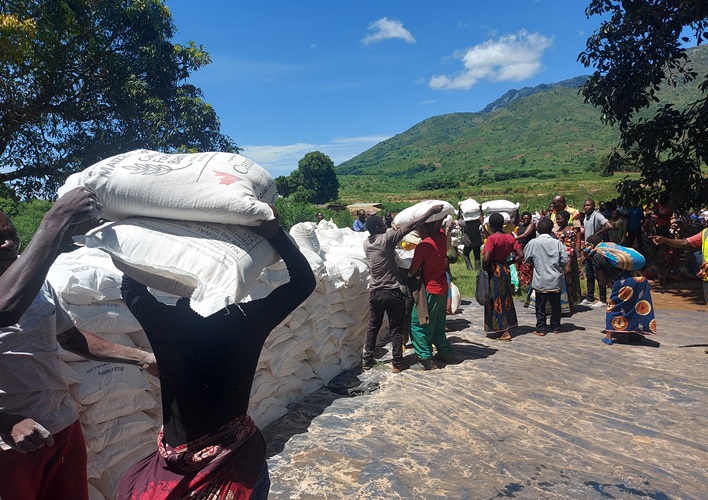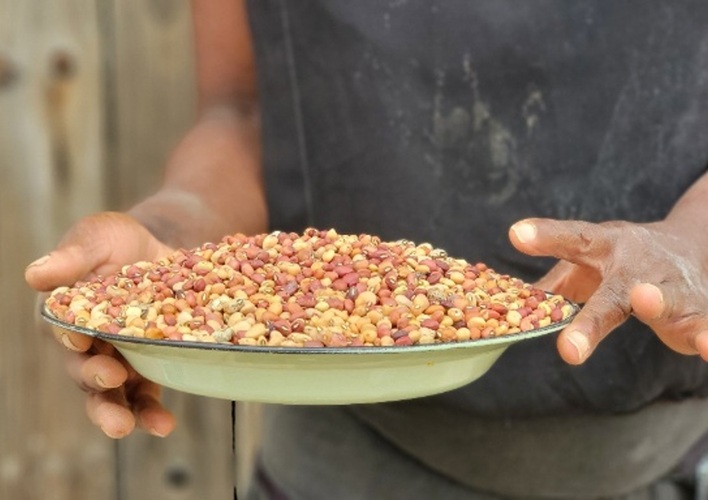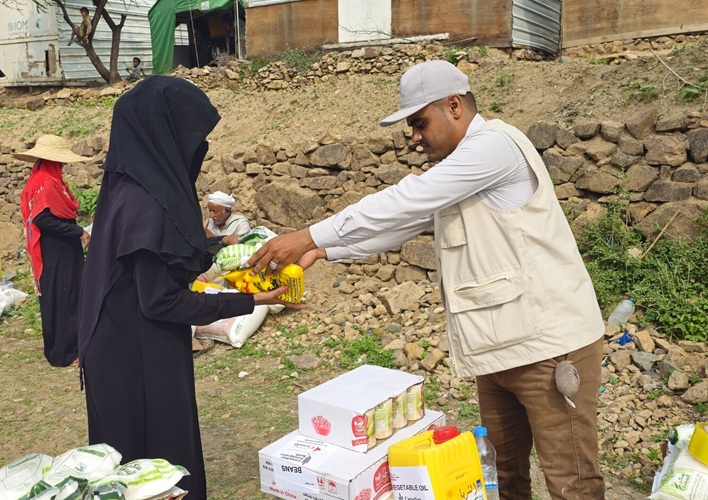
In a world of cuts to international aid, Foodgrains Bank members remain committed to our set of core Christian values, rooted in the fundamental belief that no person deserves to go hungry. Because of this, we strive to affirm the right of each person to have access to adequate food and to be free from hunger.
We asked two of our member agencies about this topic – Canadian Baptist Ministries international programs team lead Julia Wall-Bowering, and Evangelical Missionary Church of Canada (EMCC) director of world partners Nicole Jones-Qandah.
“The fact that we have to eat to live means that we are dependent beings – on one another, on our environment, and on God… we must live in relationship,” says Julia, when asked why she believes food should be considered a human right, rather than a privilege. “If we place food in the categories of privilege or even just a charitable act, we fail to recognize the humanity of those who are hungry and we put our own humanity in peril by thinking we are independent from them.”
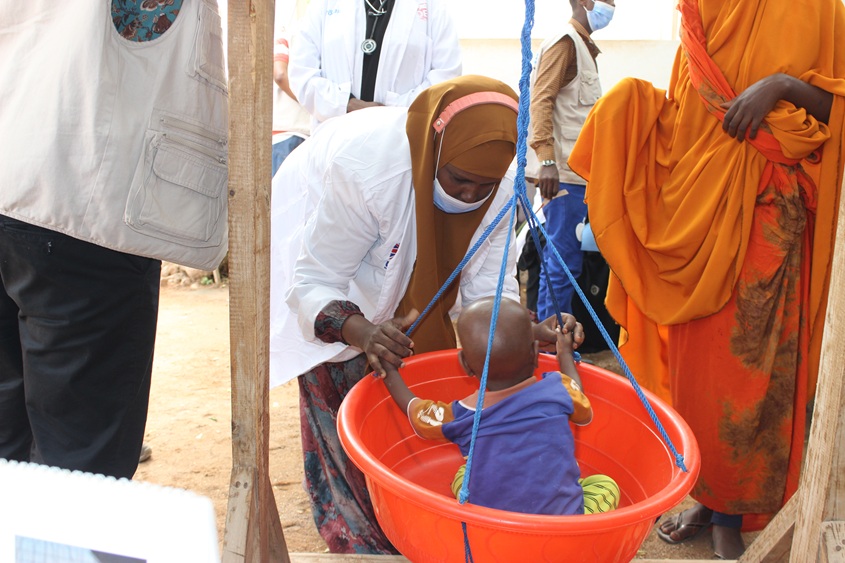
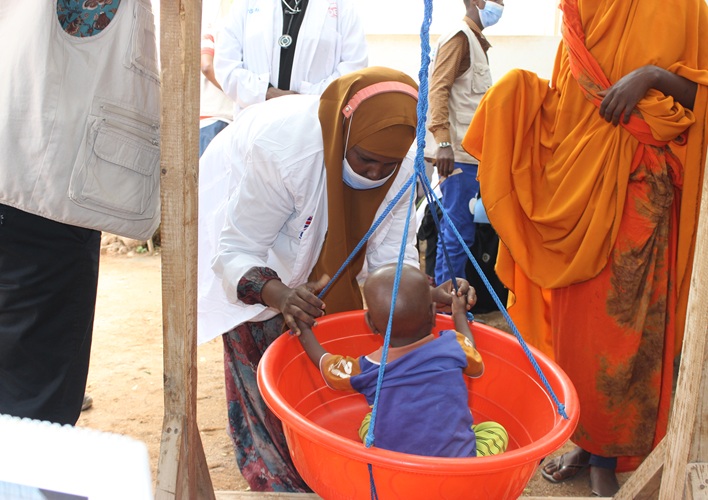
A child is weighed at a clinic run by Trócaire Somalia, a Development and Peace — Caritas Canada partner. Since this photo was taken, Trócaire Somalia’s lifesaving nutritional programming has faced a massive funding shortfall. It will lose over $2 million in British government funding in March 2026, even as malnutrition surges. Now widespread, such cuts to international aid outlays are presented as mere budgetary decisions by major global donors. They are, in fact, choices that can make the difference between life and death for millions of people whose right to food is threatened. (Photo: Trócaire)
International programs must address individuals from a holistic lens, acknowledging their wholeness and integrating faith with action, says Julia. “Because of this, food plays a central role in much of our partners’ programming. Sometimes that looks like a large Foodgrains Bank food assistance project, but it may also look like gathering youth together around several meals while they learn about peacebuilding.”
Listening to and serving the vision of local partners who deeply understand their own assets and needs is another integral aspect of international programming, says Nicole as she reflects on how EMCC operates.
“This listening has resulted in a commitment to investing in sustainable food systems and conservation agriculture as localized and sustainable means for food and income generation in places like Ethiopia. We also recognize, as part of the calls from Scripture, to continue to serve those most vulnerable.”
Food is not only associated with survival, says Nicole, but essential for a life of wellbeing, and “part of the fabric of what makes us who we are.”
This story was originally published in the 2025 fall edition of Breaking Bread.