In 2025-26, we approved food assistance funding for our members and their partners to reach 429,941 people experiencing humanitarian emergencies and malnutrition in 16 countries.
Whether people are fleeing war, living through drought, or trying to survive after a major disaster, emergency food and nutrition support provided through our members’ partners helps people to recover from crisis.
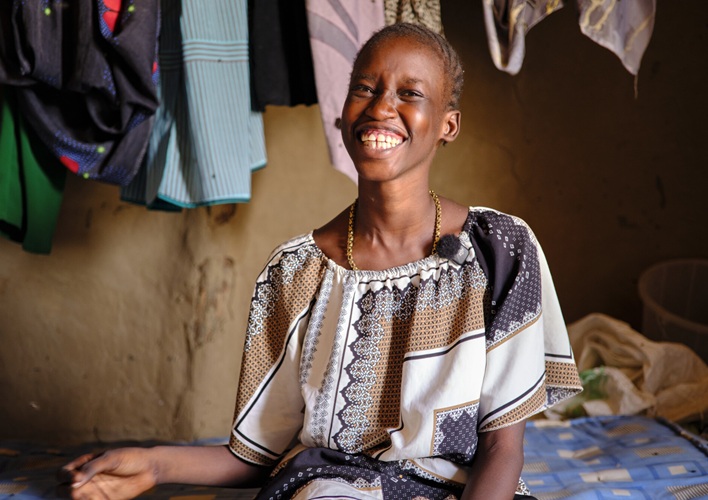
For example, from October 2025 to April 2026, Foodgrains Bank member Presbyterian World Service & Development supported its local partner in Afghanistan to reach 23,100 people (3,300 households) with cash assistance. “For months, our home had almost no food,” remembers project participant Zahra, who was widowed as a young adult and now cares for her two young sons on her own. “I often [sacrificed] my own meals so my children can eat… this support has brought a real ray of hope.” Because of the project, Zahra was able to provide three meals a day to her children.
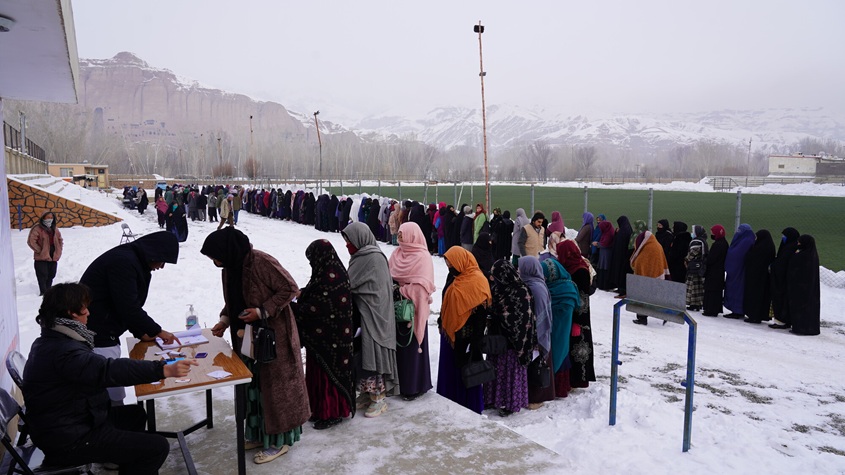
“I am constantly worried about [my children’s] food and health, especially during [the severe winters],” said Zahra, who lives in Afghanistan’s Bamyan region. Through a food assistance project funded by the Government of Canada and implemented by the Afghan partner of Presbyterian World Service & Development, Zahra received five months of $56 CAD cash transfers during the winter, when heating costs were highest, and food was scarce. (Photo: Supplied)
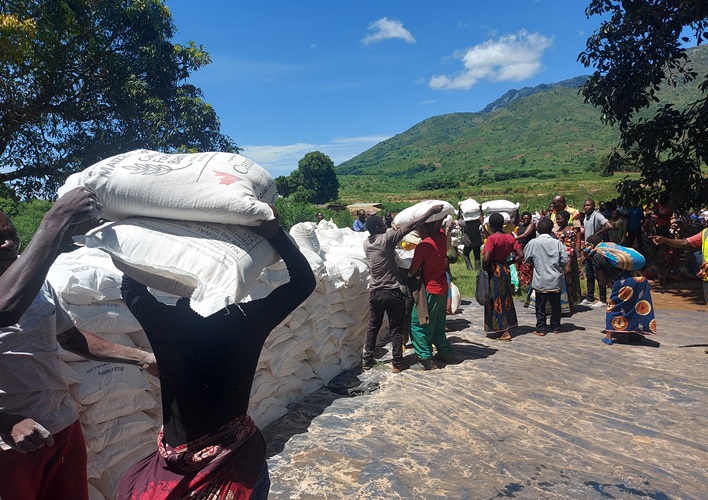
And in South Sudan, which borders the site of the world’s largest humanitarian crisis in Sudan, Foodgrains Bank member Mennonite Central Committee Canada supports its local partner the Episcopal Church of South Sudan – South Sudanese Development and Relief Agency (ECSS-SSUDRA). In 2025, eight monthly food parcels were provided to 822 households (3,247 individuals), which included refugee returnees, internally displaced people, and host families. “Before the war and floods, I used to farm,” says project participant Nyatoya. “Now, with no way to cultivate, the food from SSUDRA has saved my family. But with our household growing, we need more support to survive.”
This story was originally published in the 2026 summer edition of Breaking Bread.