As Afghanistan marks four years since the Taliban’s return to governance on August 15, 2021, the humanitarian crisis continues to be of concern – especially as the country braces for another harsh winter.
By October 2025, over 9.5 million Afghans (representing 21 per cent of the population) are expected to experience crisis levels of food insecurity and are in urgent need of humanitarian assistance, driven by climatic shocks and high food prices, and exacerbated by funding cuts.
Prior to January’s severe cuts from the United States Agency for International Development (USAID), the agency funded 35 per cent of Afghanistan’s total Official Development Assistance (ODA). In our network alone, one of our members’ partners working in Afghanistan and Pakistan had 40 per cent of their budget cut, further constraining their ability to reach people vulnerable to hunger.
“The resilience of the Afghan people in the face of such adversity is extraordinary,” says Foodgrains Bank executive director Andy Harrington. “But resilience alone cannot sustain communities. The international community must continue to provide vital support and ensure that humanitarian aid reaches those most in need.”
As winter approaches, Foodgrains Bank member Presbyterian World Service & Development (PWS&D) and its implementing partner organization in Afghanistan remain committed to delivering life-saving support, so that thousands of families can access the food and resources they need.
From October 2024 to May 2025, the local partner organization served 27,007 people (3,810 households) with five months of cash assistance.
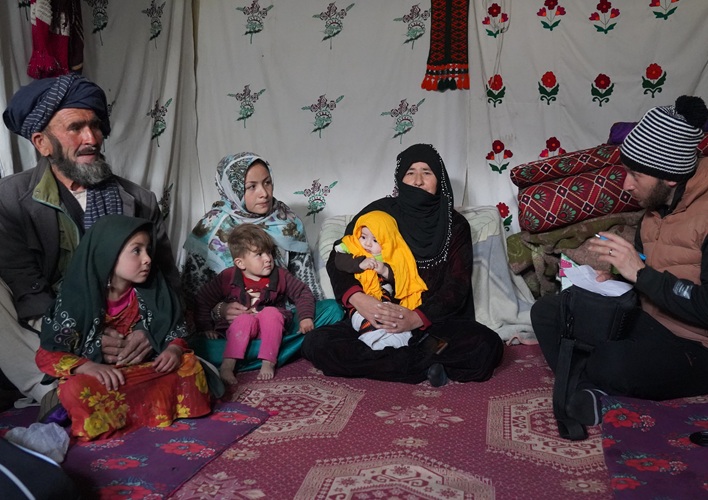
“When we received the help, it felt like a miracle,” says 30-year-old project participant Parwin*. When her husband Mohammad* was paralysed from the waist down in a road accident, the family lost their only source of income, and spent their life savings on his medical treatment – forcing them to take up residence in a cave as they struggled to afford rent.
“I kept thinking—what will people say?” she said. “What will become of my children? All four of them needed me, especially Ali*, who was only 12 months old at the time. But we had no choice. It was either the cave or the streets.”
But the cash assistance they received helped them to purchase essential food items, and brought dignity back into their lives, said Parwin.
“It was the first time in months that we could buy flour, oil, and other things we needed. My children finally had food to eat, and we were able to face the winter with less fear.”
By the end of the project, 63 per cent of households had an acceptable food consumption score (which measures how much food a household consumes and how varied their diet is), up from zero per cent of households at the start of the project.
This fall, PWS&D’s partner in Afghanistan will be starting a new project to help more families achieve food security through the harsh winter.
*names changed for security reasons