As the seasons change in Canada, the weather is frequently a topic of conversation. And when you talk about weather this year, what comes up often is El Niño. And not just any El Niño. What we’re experiencing in 2026 is being described as a “super” El Nino or even a “Godzilla” El Niño. Whatever you call it, El Niño is already hitting record levels and will have an impact on the entire planet.
What is El Niño?
El Niño occurs when the winds that blow west across the Pacific Ocean weaken or even change direction. The result is that warm water pools in the eastern and central Pacific. This pool of warm water extends from the western coast of South America across the Pacific Ocean and has an impact on weather patterns everywhere.
On average, El Niño occurs every two to seven years – though, stronger El Niño events happen less often. Since 1950, there have been seven very strong El Niño events.
For many Canadians, El Niño means a warm fall and winter ahead. A smaller snowpack could create challenges for farmers here next spring, but El Niño typically fades before our farming season begins. Most of us have enjoyed an exceptionally warm fall – warmer than in years past. And there are many of us across the country that have enjoyed this change.
The hard impact
But for many people around the world, El Niño will have a big impact on their livelihoods and diet. In fact, the World Food Programme estimates that 49 million people may experience acute hunger as a result.
The impact of El Niño will vary widely by region, with the largest impacts expected to be felt in eastern and southern Africa and Latin America.
Eastern Africa has already begun to feel the impact of El Niño. Parts of South Sudan, Sudan, northern Uganda, and Ethiopia recently experienced the driest rainy season in more than 45 years. Crop yields are expected to be significantly reduced (including complete crop failure in many places) and pastureland has been degraded due to the drought.
The combination of drought and conflict is fueling a critical food crisis. For example, in Sudan, the prices of wheat and sorghum, both of which are key diet staples, doubled between August and October. This combination of conflict and El Niño-related drought means that parts of Sudan and South Sudan are experiencing credible risks of famine in the coming months.
While parts of eastern Africa experienced drought, a typical El Niño year also means very wet conditions in western parts of east Africa. It looked like the projections were being realized when southern Somalia received as much rain in the first five days of October as it usually receives in a month. These heavy rains raised concern that flooding that would destroy crops, force people from their homes, and increase disease spread.
Fortunately, rain has tapered off significantly since then. This has reduced the flooding risk considerably, although heavy December rains could still do damage. In fact, in much of Somalia, rainfall will help rejuvenate crops and pastureland. To date, the story has been different in neighbouring Kenya. While heavy rains were forecast, less rain has come than anticipated. Even if rains improve now, pastureland will be restored less than hoped and crop development is uneven.
Southern Africa is often the epicentre of El Niño’s impact because its rainy season typically aligns when El Niño is the strongest. The rains that come from December to February are critical for crops in the region but forecasts are for high temperatures and drought conditions. Typically, El Niño has reduced crop yields and led to increased hunger. Zimbabwe is most at risk and often experiences the largest impact on rainfall and crop production.
One other region of focus is Central America, where El Niño impacted the recent rainy season. Similar to east Africa, much of Guatemala, Honduras, Nicaragua, and Colombia experienced historic dry conditions. In some countries, this has delayed planting or reduced expected harvests. In Guatemala, more than 50% of the crop will be lost in southern parts of the country.
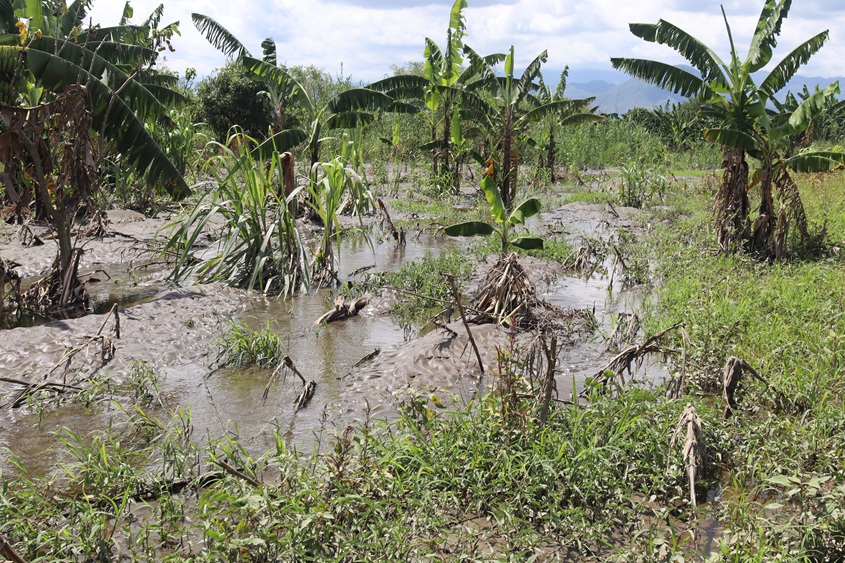
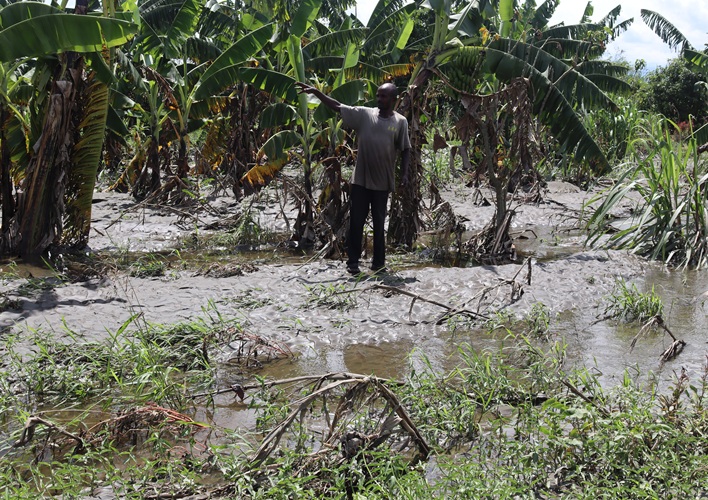
In Kabuga Village, Uganda, Kabugho’s garden has been completely destroyed by floodwaters during the October 2026 flooding. (Photo: ERDO)
How do we prepare?
Foodgrains Bank members and their partners are responding to El Niño and severe weather climate by helping mitigate the impact and responding to the hunger needs that emerge. Partners are training farmers as they adopt conservation agriculture to improve soil health and moisture levels, which is more critical than ever when rains are erratic. In several potentially affected countries, partners are working with communities to restore landscapes , making them less susceptible to floods or drought. In many cases, partners are also introducing and promoting drought tolerant crops, which are demonstrated to be more resilient in El Niño years.
Despite these efforts, there is still expected to be hunger, particularly in southern and eastern Africa. Hunger will peak at different times throughout 2027, depending on the region. A failed crop in Zimbabwe, for example, will mean some need now, but growing need as resources become even more scarce. In southern Africa, hunger needs will peak starting in October 2027. Assistance will be needed to help people who have been impacted.
Our members are ready to respond. The last El Niño was from 2023 to 2024. In southern Africa, crops failed and hunger was widespread in 2024. Five members – ERDO (Emergency Relief and Development Overseas), MCC Canada, Presbyterian World Service & Development, The United Church of Canada, and World Renew – supported partners in Malawi and Zimbabwe with $3.7 million of food assistance and supported 39,400 people during the lean season.
Like with any weather phenomenon, it is hard to know exactly what will happen as a result of this El Niño. Foodgrains Bank members and their partners around the world are already working to help farmers get ready and are well positioned to provide humanitarian assistance should it be needed. Together, they are helping communities prepare for what may come, rather than facing its impacts alone.