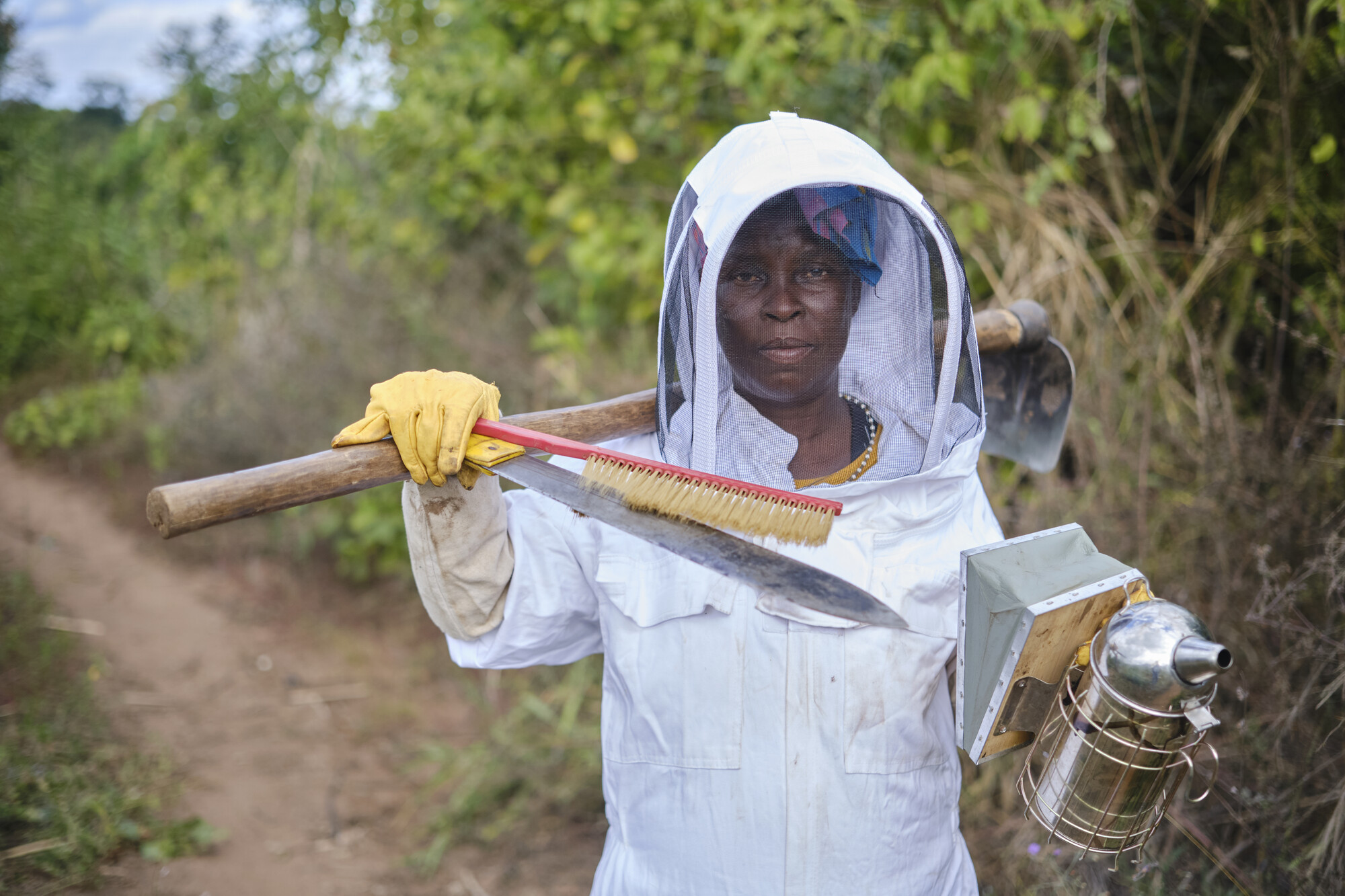
Three years ago, Regina never would have imagined she could start her own apiary.
“I didn’t know women could do beekeeping,” the 50-year-old mother of four says of her perceptions at the time.
As a farmer in rural Mozambique, Regina spent many years tending to crops so she could feed her family. But other income-generating activities were often led by men in her community. As a result, single mothers and widows often lacked the skills needed to earn an income on their own.
In 2023, Canadian Foodgrains Bank launched the Nature+ program to help farmers – especially women and vulnerable groups – adapt to climate change and maintain their livelihoods with sustainable, nature-based solutions. Through this program, the Adventist Development and Relief Agency (ADRA) Canada, a Foodgrains Bank member, supported a three-year project in Regina’s community.
“My children joined the project first, with a focus on beekeeping,” says Regina. “When they first invited me to join the project, I declined – until I saw them harvesting honey, selling it, and making money. That’s how I went to find my own beehives, and looked for a place to set up my apiary and I started working on my apiary. I’ve already collected honey, I’m harvesting it. Things have changed at home – I’ve become a real beekeeper… we are now saving money and buying things using proceeds from our work.”
She remembers tough times as a farmer, and supplementing her earnings from farming by going to the market for tree cutting jobs. Now, Regina’s happy to have learned how to do beekeeping as an additional source of income, and is training her neighbours with the skills she has learned.
ADRA Canada’s local partner, ADRA Mozambique, also trained Regina on conservation agriculture techniques to help combat the effects of extreme weather events. This helped improve her overall food security.
“Me and my children now have a bit of savings, and food security has improved as well. In addition to my maize and sorghum crops, I have a vegetable garden… we now farm more efficiently and harvest more crops,” she says.
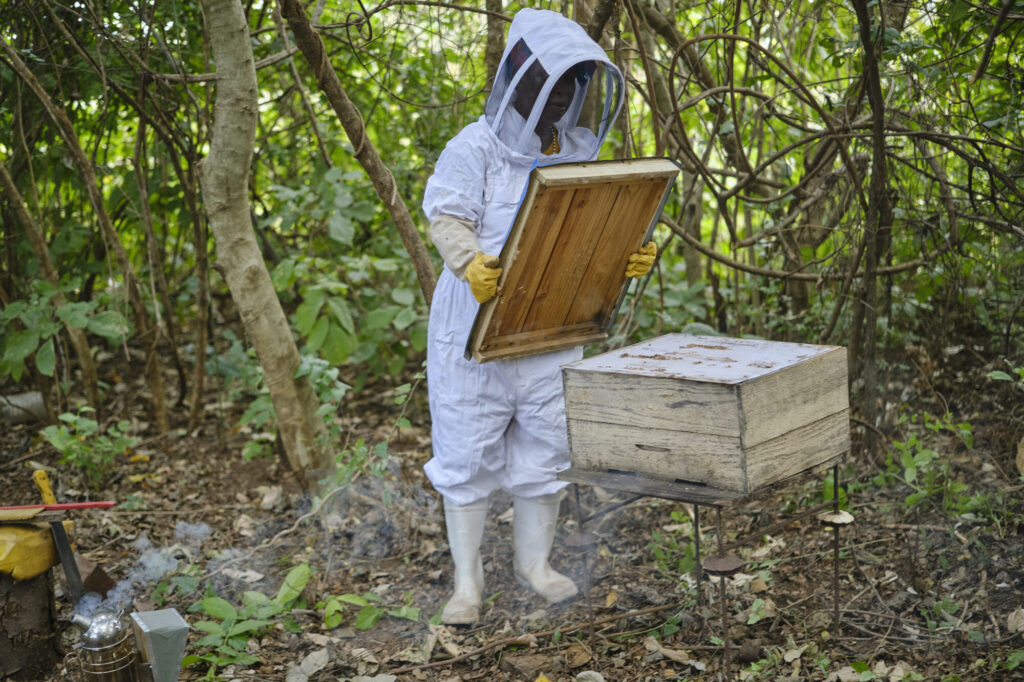
“[In the future] I wish to add more beehives to my apiary and grow my beekeeping business,” says Regina. (Photo: KB Mpofu)
But most of all, Regina is proud of the progress she has made as a beekeeper and plans to add more beehives in the future.
“I’m proud of myself as a beekeeper because I learned how to make and handle beehives… the community supports each other with beekeeping and farming activities. We have learned to manage the bees and crops better.”
Beekeeping complements the broader efforts of our Nature+ program to restore natural ecosystems, as healthy bee populations support pollination and biodiversity across agricultural landscapes.
To read more on our Nature+ work, click here.