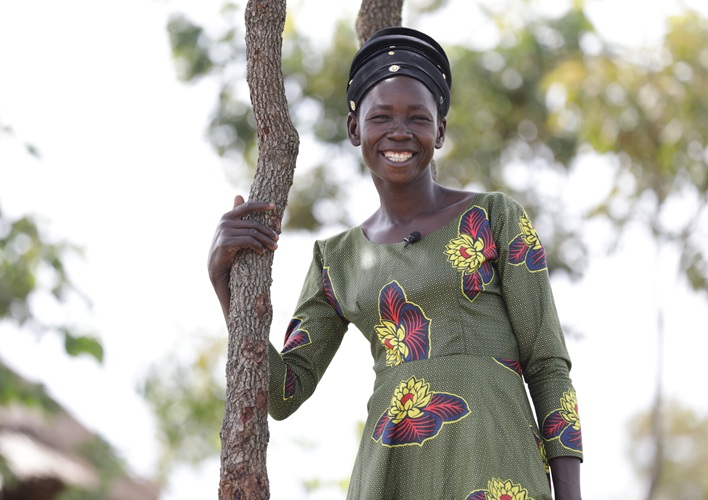
“We’ve come a long way, and I’m so proud of how far we’ve come,” says Ugandan farmer Gladys Ocida.
Gladys is one of 3,602 participants who took part in an agriculture and livelihoods program to improve food security from 2012 to 2019, implemented by World Renew partner Church of Uganda Nebbi Diocese (CoU Nebbi) with support from Foodgrains Bank. Six years on from the program’s end, Gladys is sharing the story of her family’s transformation and how they’re still reaping the benefits of the skills they learned.
“Life was very hard when I joined the project. At that time, I used to eat once a day. Sometimes I wouldn’t even eat, and if we were to eat, we had to sell our labour to get money for food.”
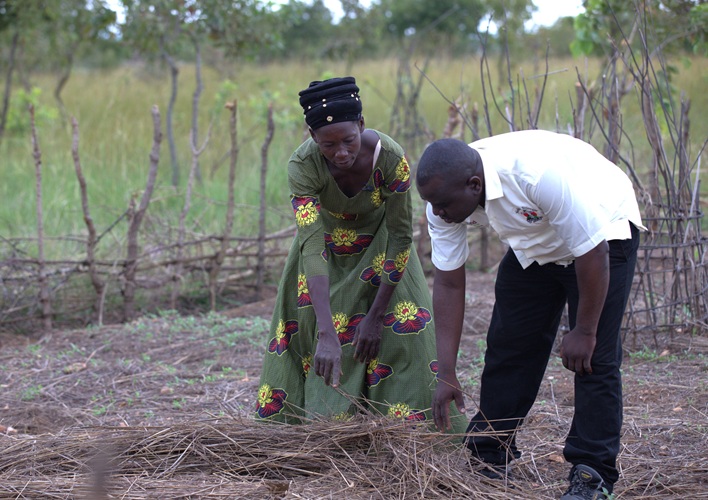
“Thanks to the stable income from the motorbikes and farming, I can save. I have an emergency fund now that ensures we’re never caught off guard,” says Gladys (left) who now teaches other farmers in her community the techniques she’s learned, with support from CoU Nebbi staff (right). (Photo: Smart Edge Media)
It was a challenging time for Gladys’ family as well as many other farmers in Kucwiny sub-county in Nebbi District, Uganda, due to the lack of rain.
Over 80% of the households in Kucwiny depend on agriculture as their main income source. Prior to 2008, Kucwiny had two rainfall seasons annually, but significant changes in weather patterns have led to long dry spells, making it difficult for farmers to achieve sufficient crop yields.
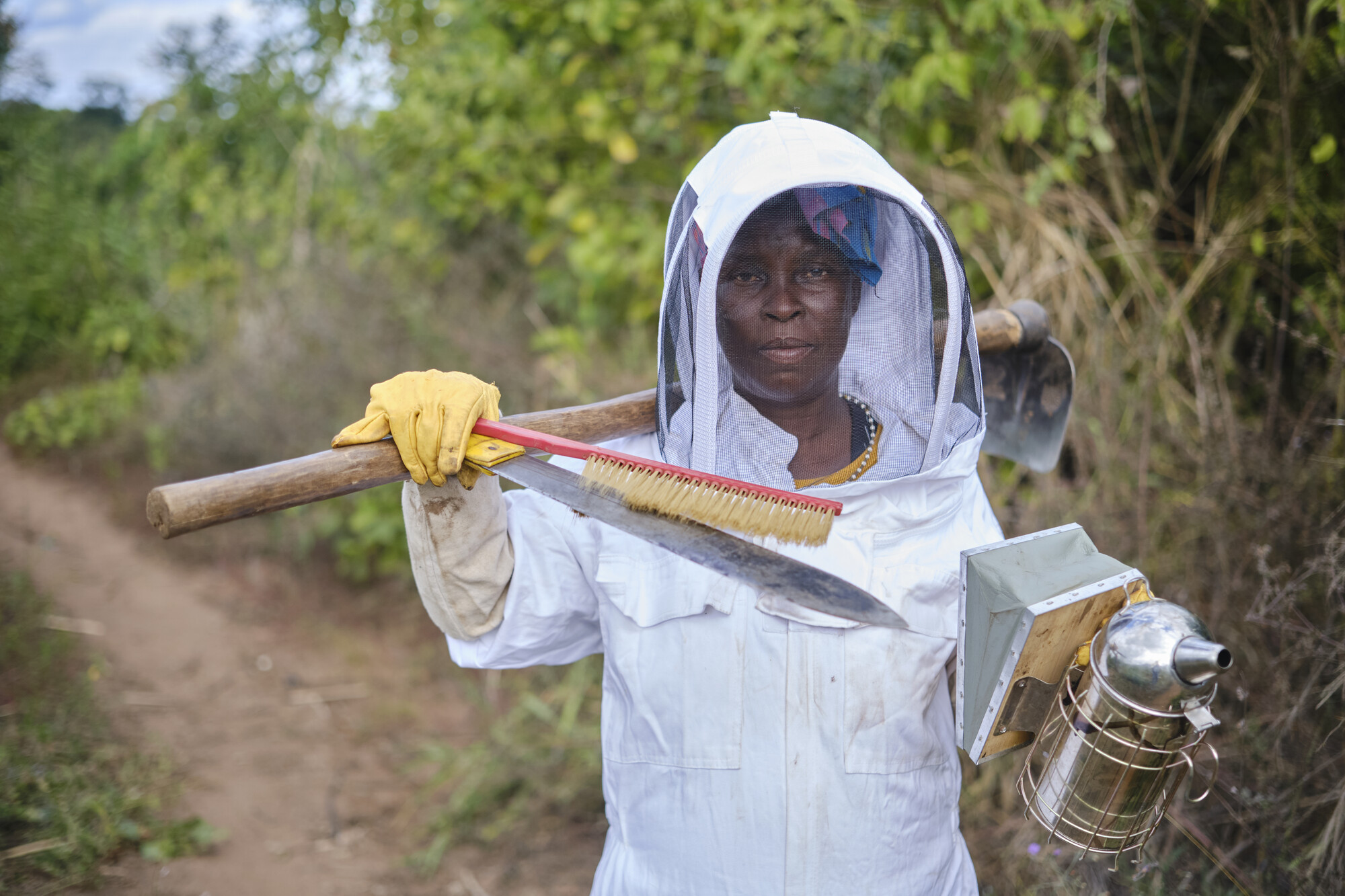
Through the project, Gladys had the opportunity to improve her sustainable farming knowledge, join a village savings and loan group to strengthen her access to seeds and livestock, learn beekeeping, and purchase
two motorbikes which she rents out for extra income.
Initially farming on one to two acres of land, Gladys now farms on seven acres of land alongside her husband Dickson Oyirwoth, who is proud of Gladys’ efforts and the impact it is having on their children.
“My children were malnourished before, but now they are healthier,” says Dickson. “They are able to focus at school because they’re well-fed, and that gives me hope for their future… the children are happy about what she’s doing. She’s a role model in this community.”
This story was originally published in the 2025 spring edition of Breaking Bread.