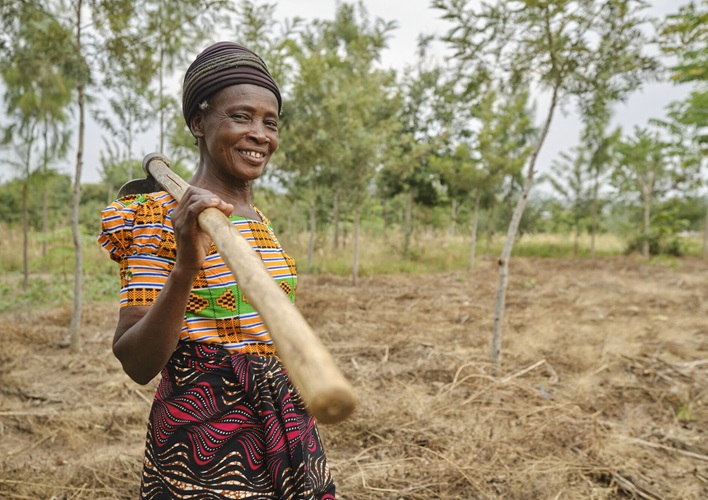
“I’m recognized as a community champion, and my improved yields funded my children’s university education,” says Florentina, reflecting on the biggest changes in her life since adopting conservation agriculture (CA) on her farm.
Florentina has been farming for nearly a decade in Tanzania, where she lives with her husband Robert and three grandchildren. Like many rural households in her community, for seven months of the year her family used to struggle to have enough nutritious food on a daily basis.
But now, putting food on the table is far less challenging, because in 2021 Florentina joined a five-year agriculture and livelihoods project, implemented by African Inland Church of Tanzania Mara and Ukerewe Diocese (AICT-MUD) with support from Foodgrains Bank member World Renew. The project aims to sustainably increase crop production in areas affected by dry and erratic weather patterns by introducing and promoting CA.
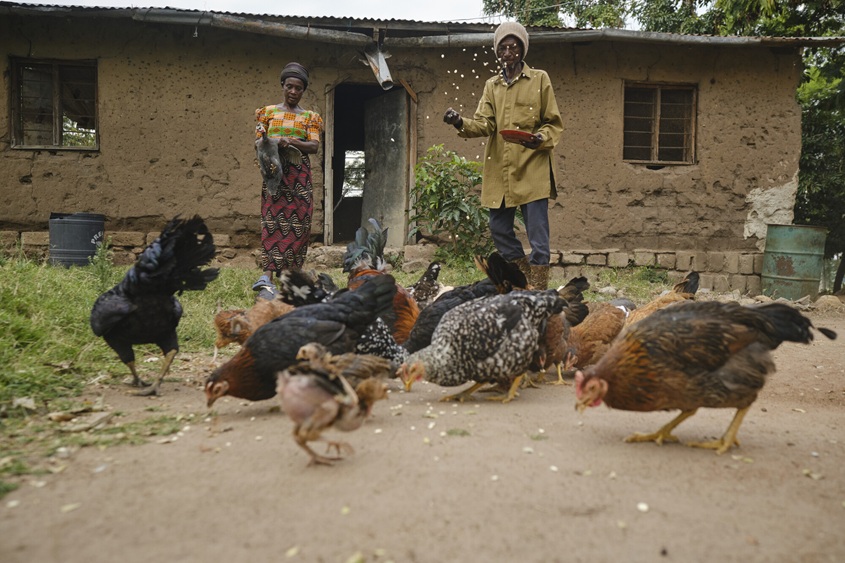
Between 2021 and 2026, over 3,000 households – reaching 18,000 people – are participating in the project to improve their food security through conservation agriculture, as well as marketing and nutrition training, village savings and loans groups, and strengthened extension services. (Photo: KB Mpofu)
AICT field officer Murungi, who supports farmers with training on conservation agriculture, good agronomic practices, and nutrition, among other project activities, says she’s seen notable changes through the project.
Household relationships became more peaceful, soil fertility recovered on fields where farmers are using CA, and harvests increased significantly.
Farmers from nearby communities visit project sites to learn from successful farmers in the project, and seeing the impact it makes for each family is encouraging, says Murungi.
“[One of] the main sources of hope is farmers who adopt and live with conservation agriculture are now food-secure, unlike many [other] households.”
Before joining the project, Florentina’s farm suffered from low soil fertility and poor yields. Although she was convinced by the potential of CA, she initially struggled to persuade others to adopt the practice due to skepticism around using cover crops that weren’t edible.
“Now I’m viewed as a role model, and my neighbours aspire to adopt similar agricultural practices… adoption is strong,” she says.
By using CA Florentina has seen her yields increase dramatically – from just three 100 kg bags per acre to 15 – and she’s aiming for 18 bags next season, weather permitting.
“My dreams are to expand CA farming, venture into large-scale livestock farming, establish fish ponds, and double the number of mentored farmers from 30 to 60,” says Florentina as she looks to the future with hope.
This story was originally published in the 2026 winter edition of Breaking Bread.