Across Africa, small-scale farmers face challenging conditions for increasing their crop production, feeding their families, and building stronger livelihoods. But they also have access to rich biodiversity (though threatened), generations of local expertise, and significant potential for growth.
And we learned over a ten-year period, while implementing what we call conservation agriculture plus (CA+), that making the most of these strengths was one of the keys to support farming families in building a successful livelihood.
To better understand the impact of more than a decade of this work, Foodgrains Bank picked three of our members’ partner organizations in East Africa to research.
Over ten years, farmers adopted core CA practices – reducing soil disturbance, maintaining soil cover, and rotating crops – together with other farming ‘best practices’, supported by community groups, market connections and policy change (CA+). For many farmers, it was a significant change from how they had been farming previously, and took time to adjust to. However, when farmers started to experience improved yields – even through challenges such as drought – and noticed neighbours who weren’t using CA experience very different outcomes, their confidence in CA grew.
Our newest resource Regenerating Hope through Conservation Agriculture+ is a 24-page case study on the incredible impact of the CA+ approach in Ethiopia and Kenya, where families are experiencing significant improvements in their food security and livelihoods as they are better able to adapt to the effects of climate change. Together with political advocacy for the benefits of CA+, gender equality is improving, women are stepping into more leadership roles, and trust is growing between communities and the local partner organizations supporting them.
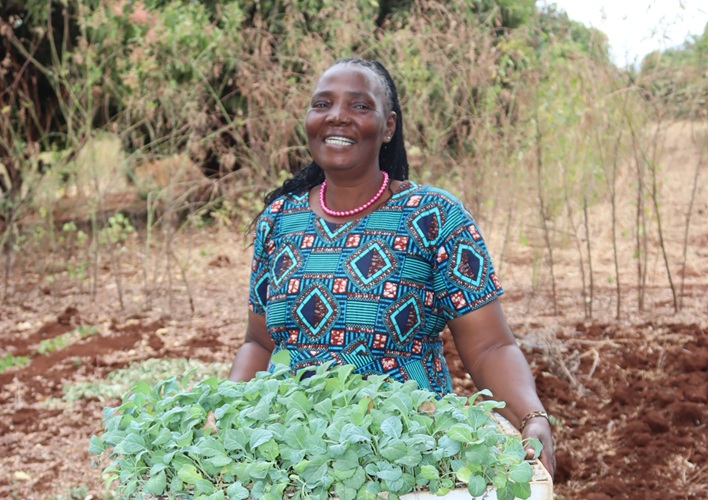
This is a story of hope – showing transformational change for farmers like Margaret Kagemi in Kenya. “I educate others on how I am working on my garden so they can also try to grow their area,” she says. “I advise them on what CA is, and what minimum tillage is and not disturbing the soil, and soil covering. Because when there is little rain you can’t miss eating something from the garden. When the sun is out the soil is not all that burned by the sun. Even the garden looks smart when it is covered.”
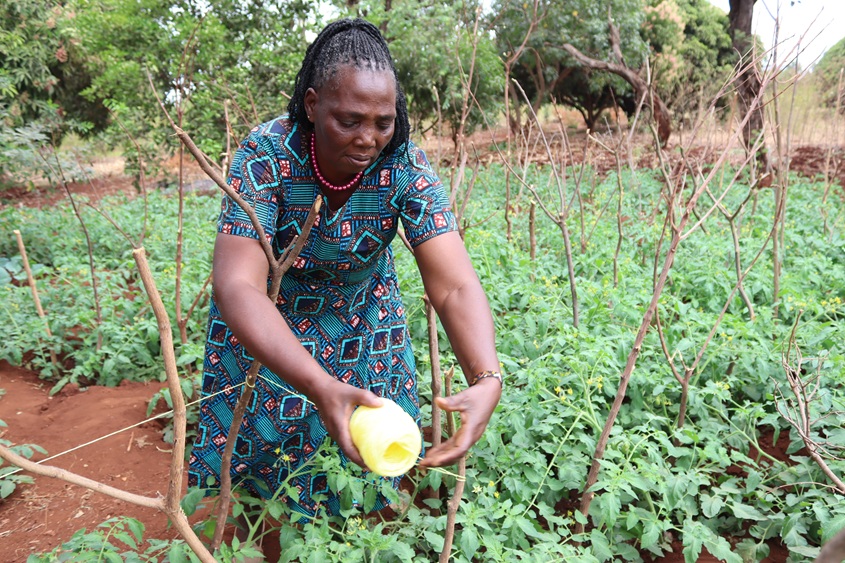
Margaret tending to her tomato plants. (Photo: James Opiyo Otieno, NCCK)
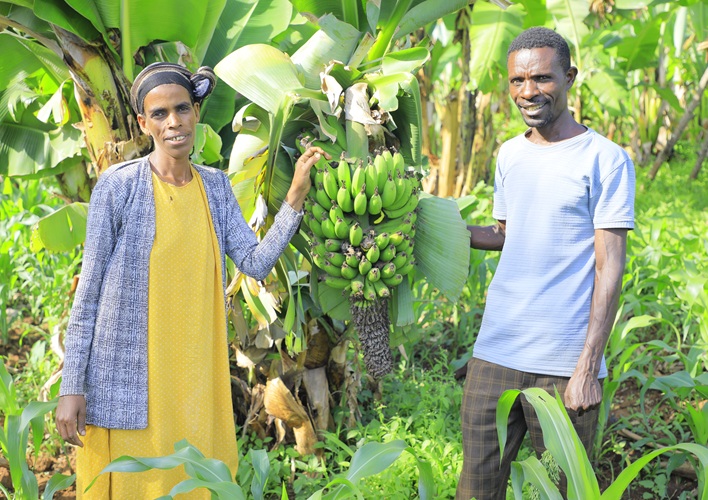
And in Ethiopia, through the success of his CA+ farming, Abraham Tito has been able to provide his family with nutritious food, purchase livestock, and buy land with his profits to build a rental house that will provide more income for his family.
“Before CA+, I struggled with farming due to climate change,” he says. “There wasn’t enough moisture in the soil to grow crops and I often experienced crop failure year after year due to lack of rain. My farming practices didn’t conserve soil or water, so I couldn’t produce enough food for my family. But now, because CA+ helps maintain moisture and improves soil fertility, I get good yields from various crops.
“I now grow a wide variety of crops – maize, beans, taro, sweet potato, and other fruits and vegetables. So, in terms of food provision, it has increased year-round. I now feed my family from my own harvest.”
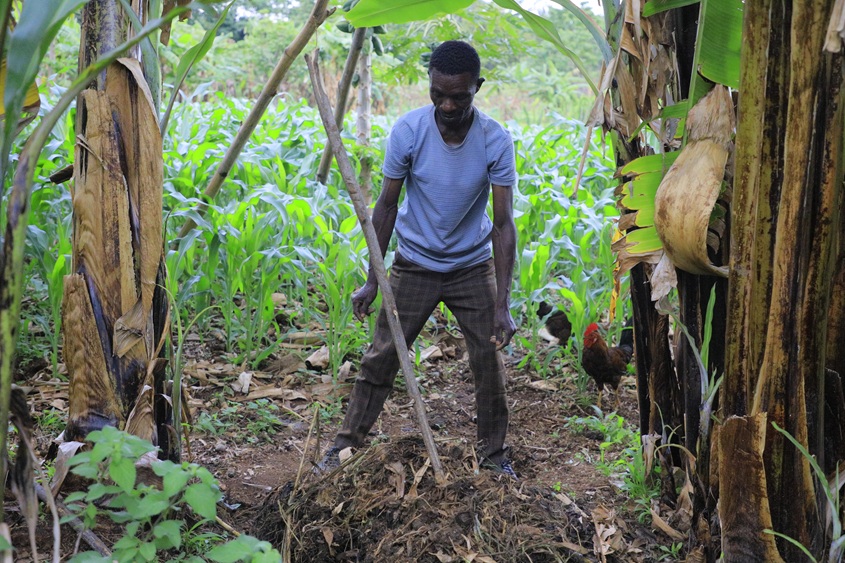
Abraham farms 1.5 ha, most of it under CA with a variety of crops. (Photo: Minase Dea, TDA)
The growing impact of CA+ in both countries is evident in the numbers. In Ethiopia, for example, Tearfund’s local partner Terepeza Development Association started implementing CA in 2012 with just 40 farmers in two districts. And today, over 85,000 farmers in 11 districts of Ethiopia are practicing CA+.
But the case study doesn’t just talk about the numbers – it tells the bigger story of regenerating hope. After more than ten years of CA+ programming, the approach isn’t just producing healthier soil or improved harvests; it’s helping thousands of families feel more capable of shaping their own futures through sustainable farming – one acre at a time.
To download the case study (available in both a short version and the full 24‑page report), click here.